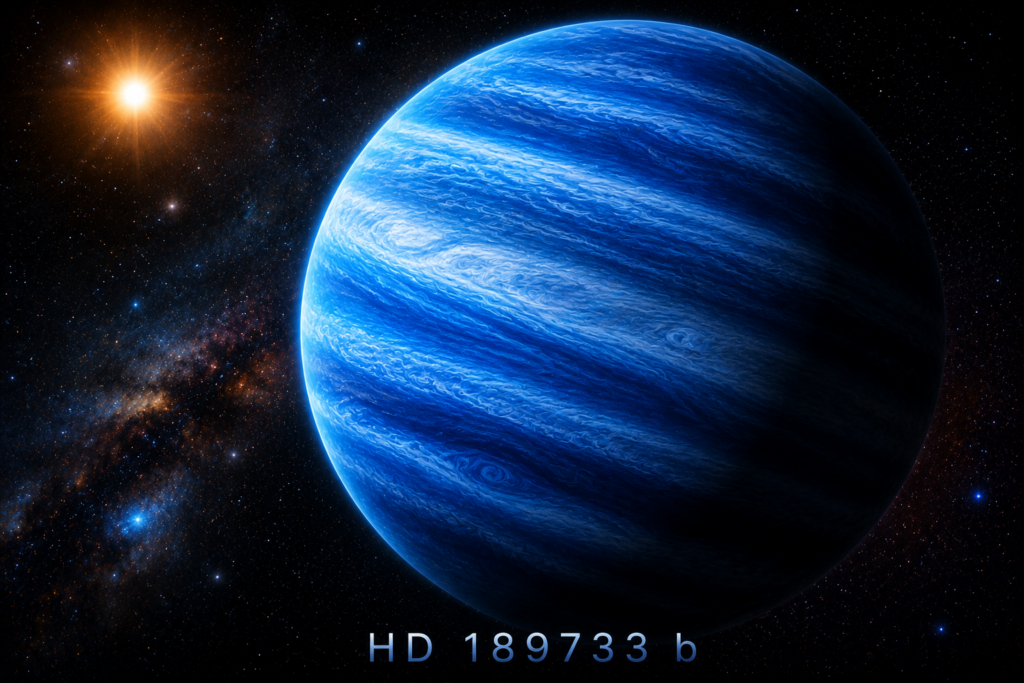
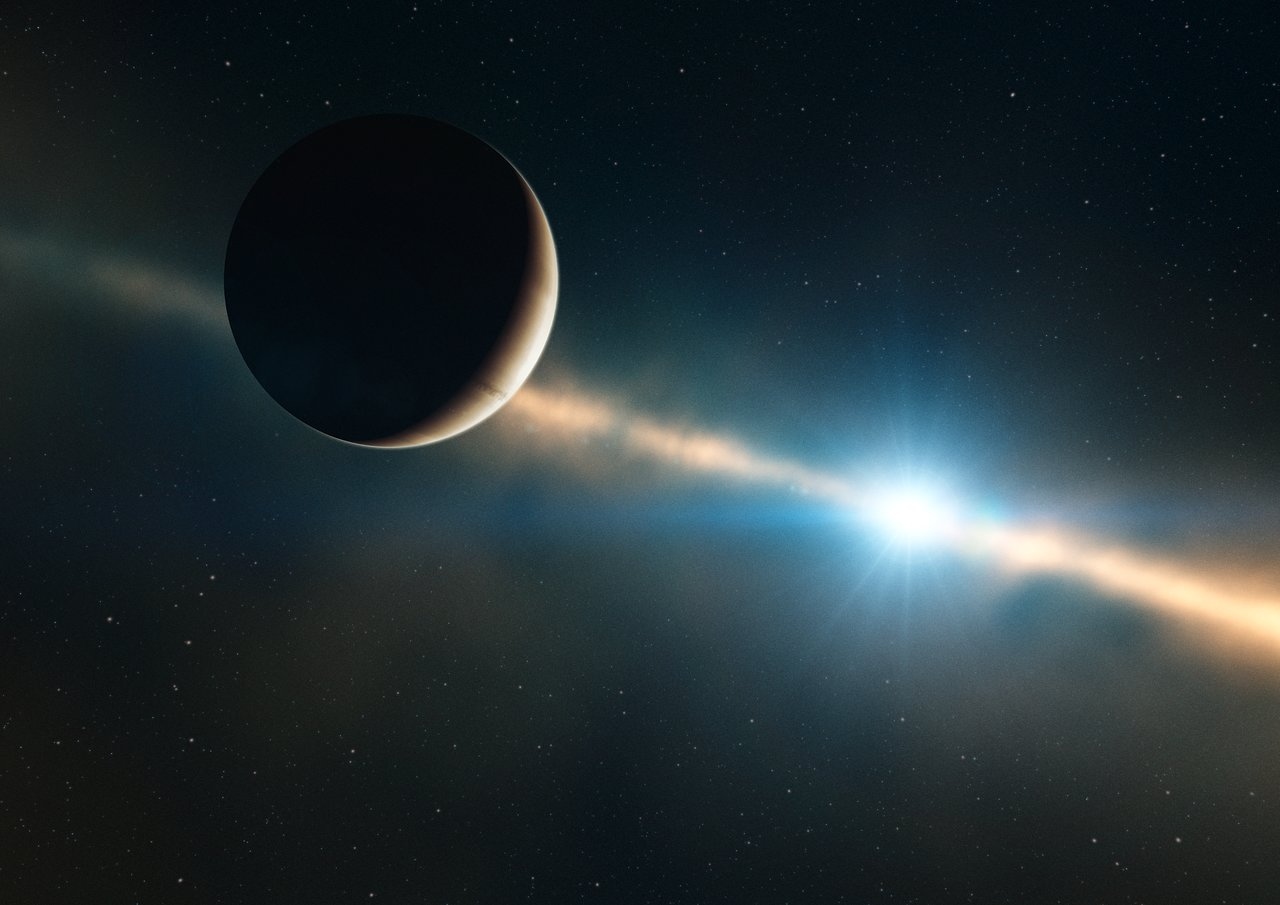
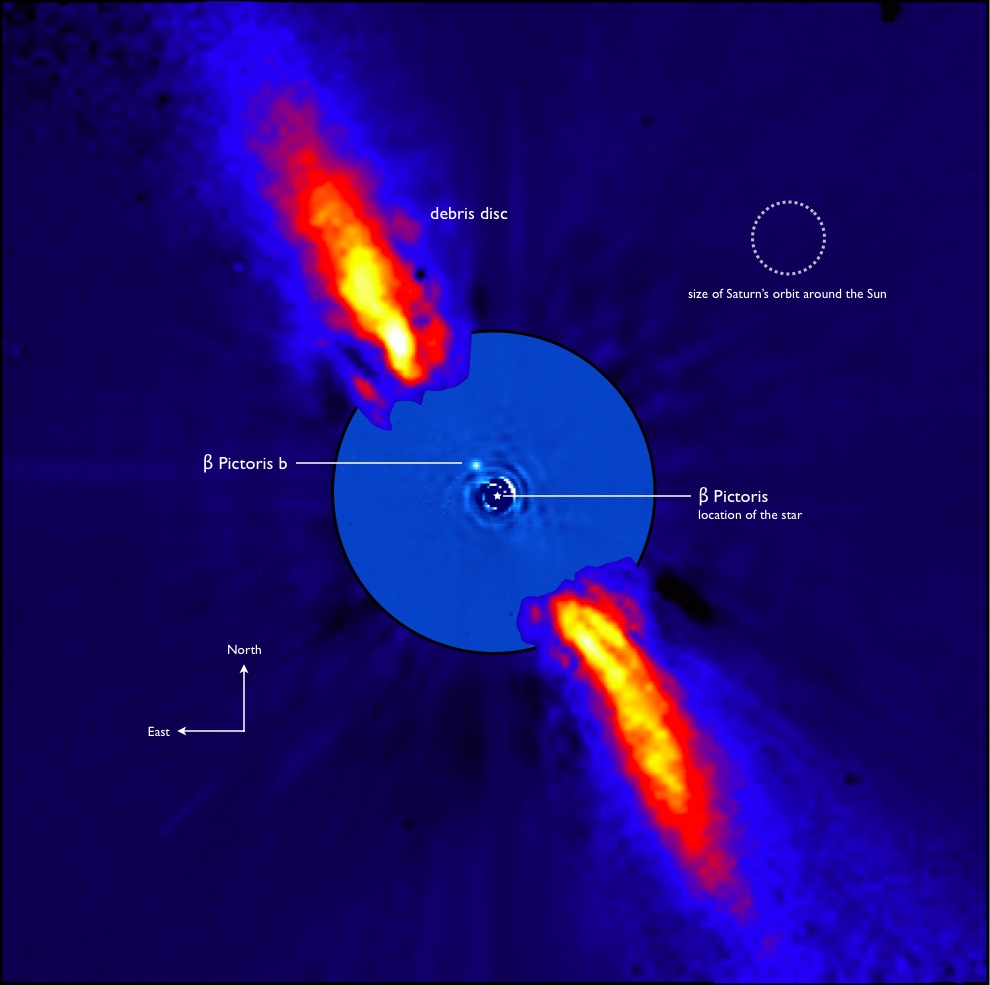
Picture a young, gigantic planet, about 20 million years old, a baby in cosmic terms. This is Beta Pictoris b, roughly 63 light-years from us. It was already famous for being one of the few exoplanets ever photographed directly, and for spinning so fast that its day lasts only about 8 hours.
Now it turns out it also emits radio waves. Using the MeerKAT radio telescope in South Africa, a team from Harvard and the University of Oregon picked up repeating radio bursts coming from the planet itself, not from its star. It’s the first time this has been done for an exoplanet. It was extremely hard to achieve because a star’s radiation usually drowns out anything near it, but this star is magnetically quiet and left the field clear.
What the bursts reveal is the most striking part. They appear to come from auroras, like Earth’s northern lights but on a giant scale: charged particles moving along the planet’s magnetic field. The frequency of those waves depends on the field’s strength, so by “listening” to them, the researchers estimated a field of at least 1,250 gauss in the region where they’re generated. For perspective, Earth’s field at the surface is about 0.5 gauss, and Jupiter’s, the strongest in our Solar System, averages around 4 gauss and peaks near 14. That makes this the first direct measurement of an exoplanet’s magnetic field.
It matters for a big reason. Magnetic fields can shield atmospheres from stellar radiation, a key factor in judging which worlds might one day be habitable. Until now there was no way to measure them from this far away, and this technique could open that door.
#Exoplanet #RadioAstronomy #SpaceNews #Astronomy #Science #MagneticField #BetaPictorisb