Astronomers discover the youngest planet in the universe: How Elias 2-24 b was born
Astronomers confirm the youngest exoplanet ever detected — less than a million years old and still wrapped in the disk of gas and dust it’s forming within.
A newborn cosmic baby
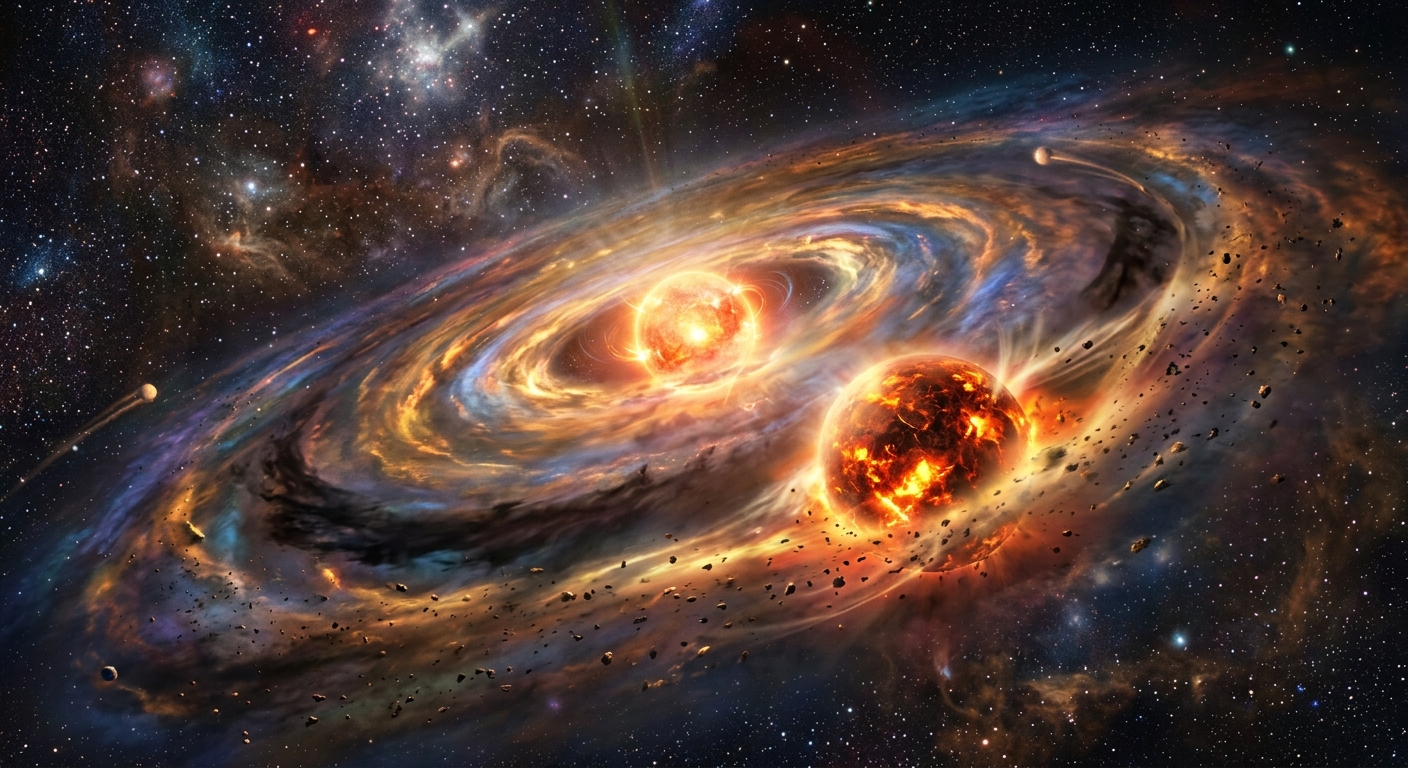
Planets, like people, are born too. And an international team of astronomers has just found the youngest newborn of them all: Elias 2-24 b, an exoplanet less than a million years old — a mere instant on the cosmic timescale.
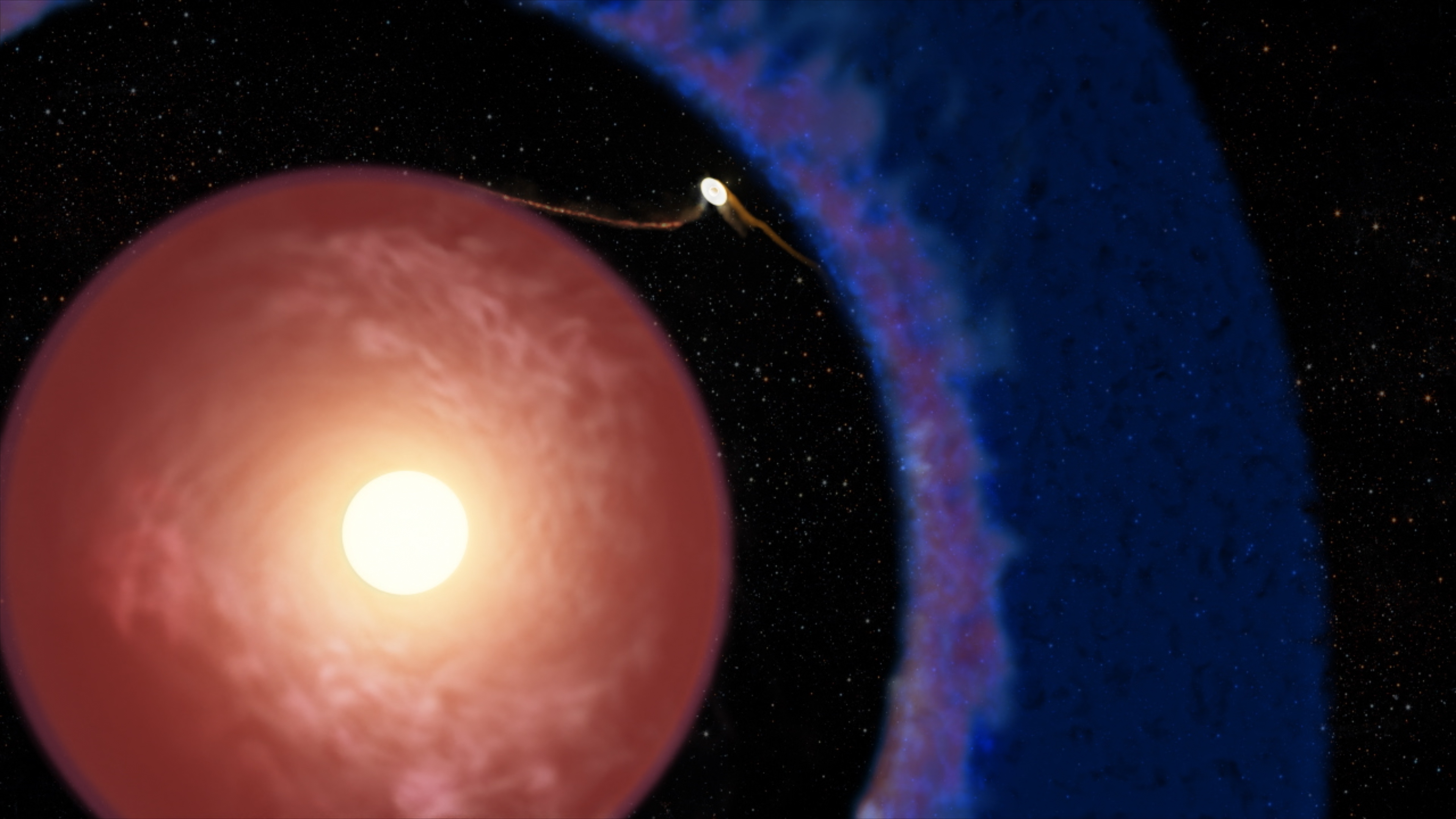
Located 450 light-years from Earth, this world weighs between 1 and 4 times the mass of Jupiter and is still wrapped in the disk of gas and dust surrounding its star, pulling in material as it continues to grow.
How they found it
The study was led by Andrea Bernardi, a doctoral candidate at Universidad Diego Portales (Chile), together with co-author Lucas Cieza of the Institute of Astrophysical Studies. The team analyzed archival observations of seven young stars captured by the W.M. Keck Observatory in Hawaii, all surrounded by protoplanetary disks — the very “nurseries” where planets are born.
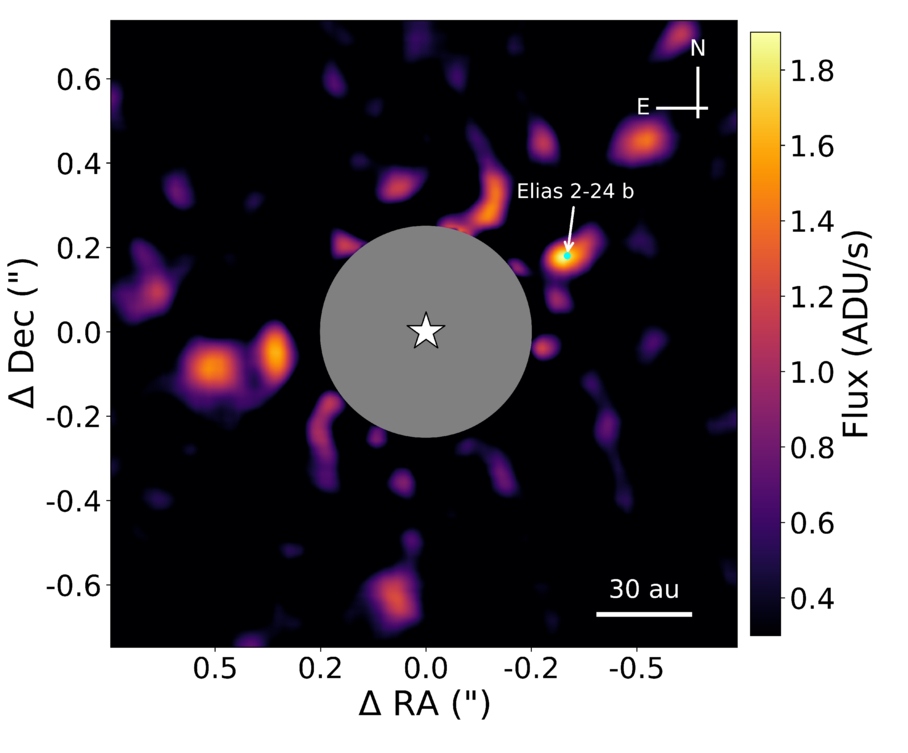
Using the Keck telescope’s coronagraph to block the star’s light, the researchers were able to make out something far fainter: a point of light hidden within a 30-astronomical-unit-wide gap in the disk. That gap is exactly what a forming planet carves out as it sweeps up material around it.
A decade-old mystery solved
That gap already had a history. About 10 years ago, the ALMA telescope, in the Atacama Desert, had detected the gap and a faint point of light within it. The VLT (Very Large Telescope) later observed it too, but couldn’t confirm whether it was really a planet.
The key was combining all three telescopes — Keck, ALMA, and VLT — and comparing archival images taken in 2018 and 2020. By analyzing the point of light’s motion over time, the team confirmed it moved exactly as a planet orbiting its star would, at roughly 54.9 astronomical units away — farther than Pluto’s orbit. The odds that this point was actually a background star aligned by coincidence were just 0.015%.
A finding that challenges the models
According to current planet-formation theories, a Jupiter-sized planet takes about 5 million years to form at that distance from its star. Elias 2-24 b is less than a fifth of that age, forcing scientists to rethink existing models.
Before this discovery, the record for youngest known planet was shared by four worlds — two orbiting the star PDS 70 and two orbiting WISPIT 2 — all more than 5 million years old. As Lucas Cieza noted:
“Our planet-formation models already struggled to explain the previous record holders. Elias 2-24 b shows us that even our best models are still missing some important processes.”
Interestingly, despite being so far from its star, the planet reaches temperatures between 1,300 and 1,600 Kelvin — hotter than many much older planets.
The start of a new era
Scientists believe this is just the beginning. With more sensitive instruments, such as NASA’s upcoming Nancy Grace Roman Space Telescope, detecting newborn planets like Elias 2-24 b should become increasingly common. As Cieza concluded:
“This is just the beginning of a new era of discovery. It’s incredible that, with current technology, we can actually see planet formation in action.”
The findings were published on September 16, 2026, in The Astrophysical Journal Letters.
Here’s the link to a short we made: https://youtube.com/shorts/rvpDvF3pxzg
Sources: