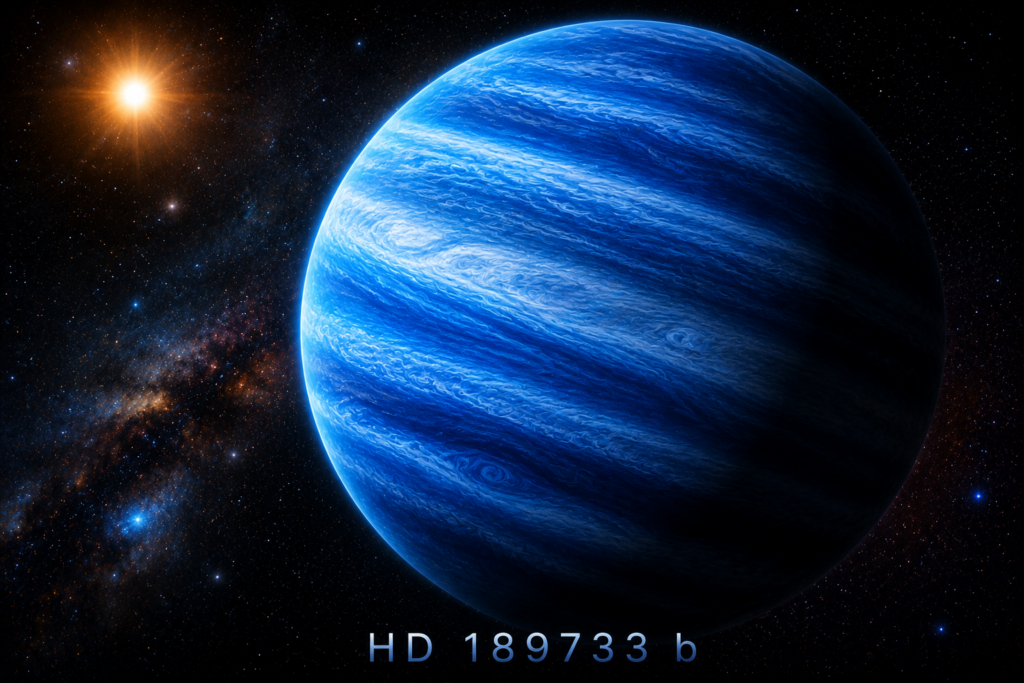
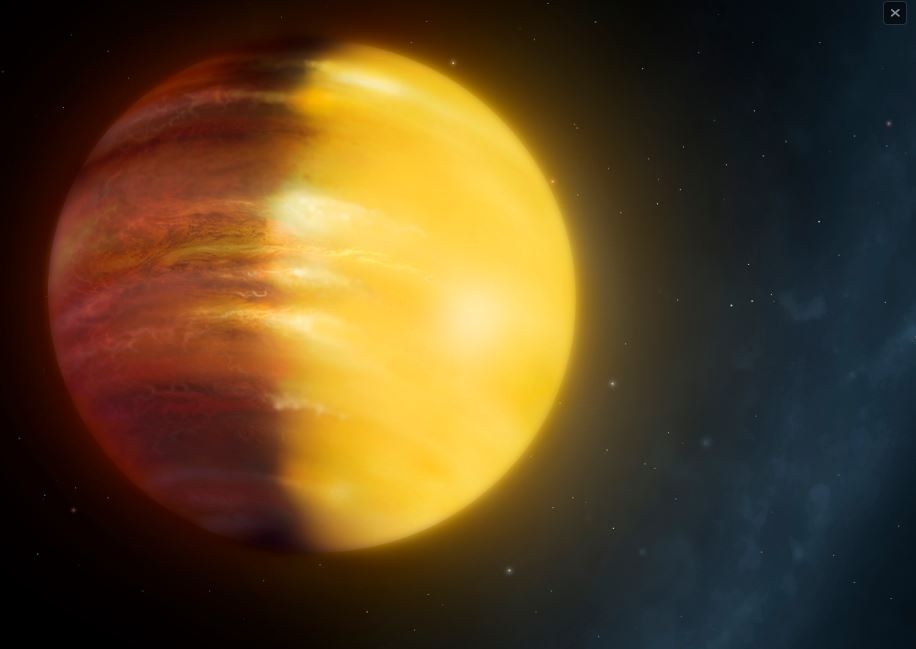
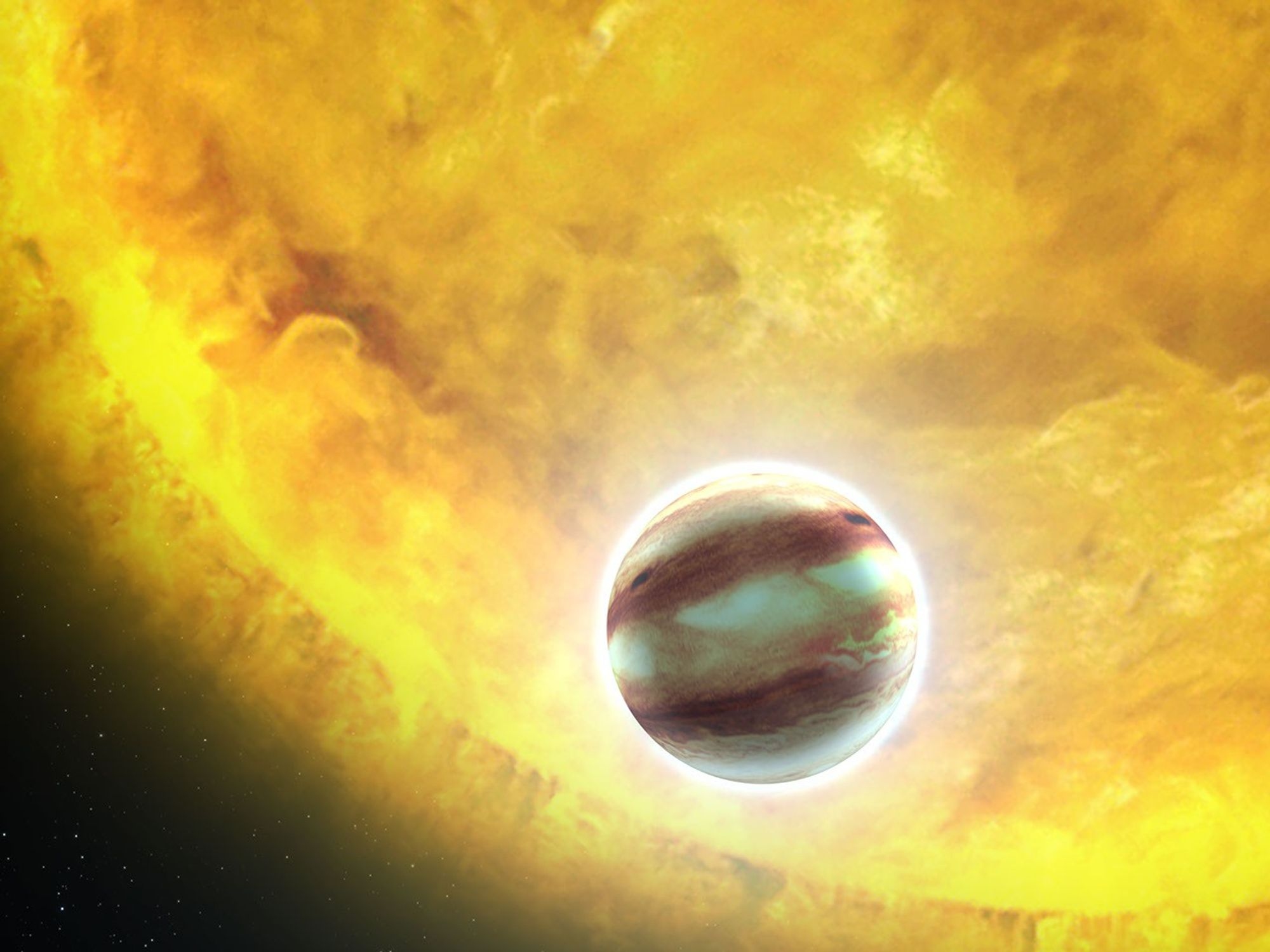
It’s an ultra-hot Jupiter about 1,000 light-years from Earth, in the constellation Cygnus. It orbits so close to its star that a full year lasts just over 2 Earth days. Because it’s tidally locked, it always shows the same face to its sun: a scorching dayside with temperatures above 2,000 °C, and a much cooler nightside.
The curious part: rubies and sapphires are chemically the same mineral, corundum (aluminum oxide). The only difference is color, which depends on trace impurities. Corundum is thought to be one of the first minerals to condense in extremely hot atmospheres, so on the planet’s nightside, where hot gas arrives and cools down, clouds of these particles could form.
How we got here: in 2016, a team at the University of Oxford analyzed data from the Kepler space telescope and noticed that the planet’s brightest spot shifted irregularly. That suggested the winds were changing direction and that clouds were appearing and disappearing. The planet’s winds are extremely fast, and the scientists proposed that those clouds could be made of corundum.
#HATP7b #Exoplanets #Astronomy #Science #Universe #KeplerTelescope #UltraHotJupiter #Rubies #Sapphires #FunFact #DidYouKnow #Space #Cosmos #Astrophysics #ScienceFacts