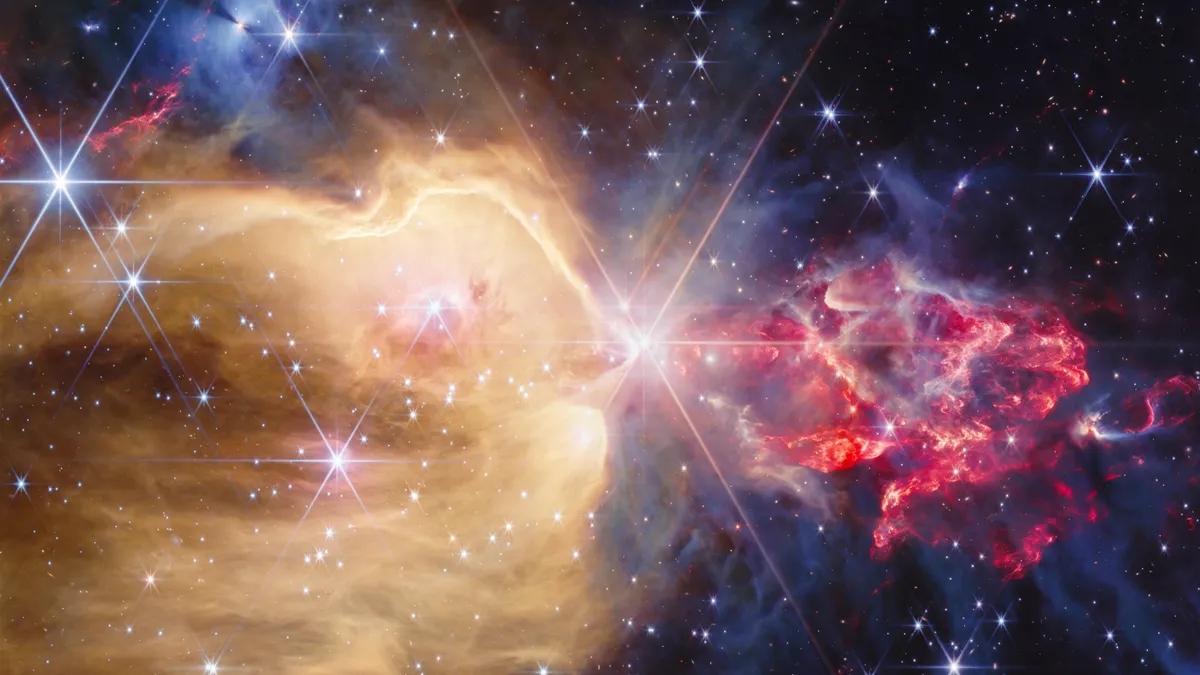
In the constellation Cepheus, about 3,300 light-years away, there’s a nebula that looks like a flower bud about to bloom: NGC 7129, known as the Flower Bud Nebula. Hidden inside are more than 100 stars younger than a million years old. To put that in perspective, the Sun is about 4.6 billion years old. If the Sun were 46 years old, these stars would be only about 4 days old, or even less. They’re true newborns.
Why are they so hard to see? Young stars spend their earliest years wrapped in thick clouds of gas and dust. The James Webb Space Telescope solved this with its NIRCam camera, which observes in the near-infrared and cuts through that dust. It revealed, in unprecedented detail, both the stars and the protostars still forming, along with the powerful jets of superheated material they expel.
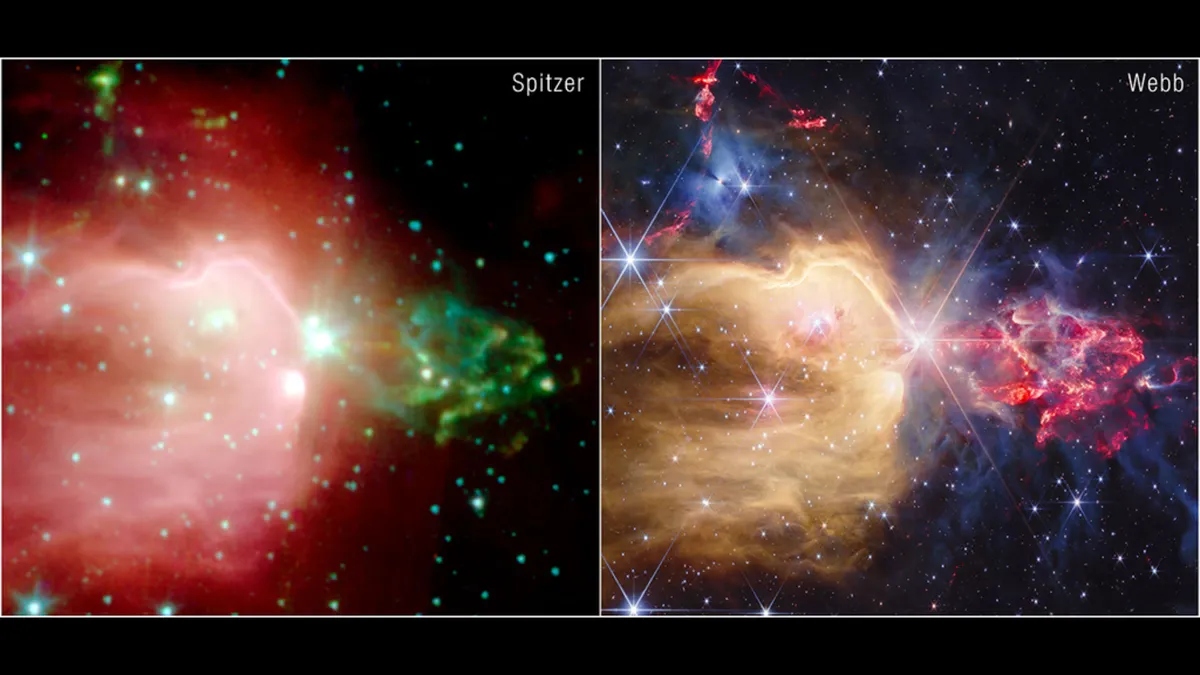
The region had already been photographed by the now-retired Spitzer Space Telescope, and comparing the two images shows how far our view of the cosmos has come. NASA describes it as a “cauldron of cosmic creation,” and it fits: it’s a natural laboratory for understanding how stars are born, including our own Sun billions of years ago.
#JamesWebb #JWST #NGC7129 #FlowerBudNebula #Astronomy #Universe #Space #Nebula #BabyStars #Protostars #NASA #Science #Cosmos #SpaceFacts #SpacePhotoOfTheDay