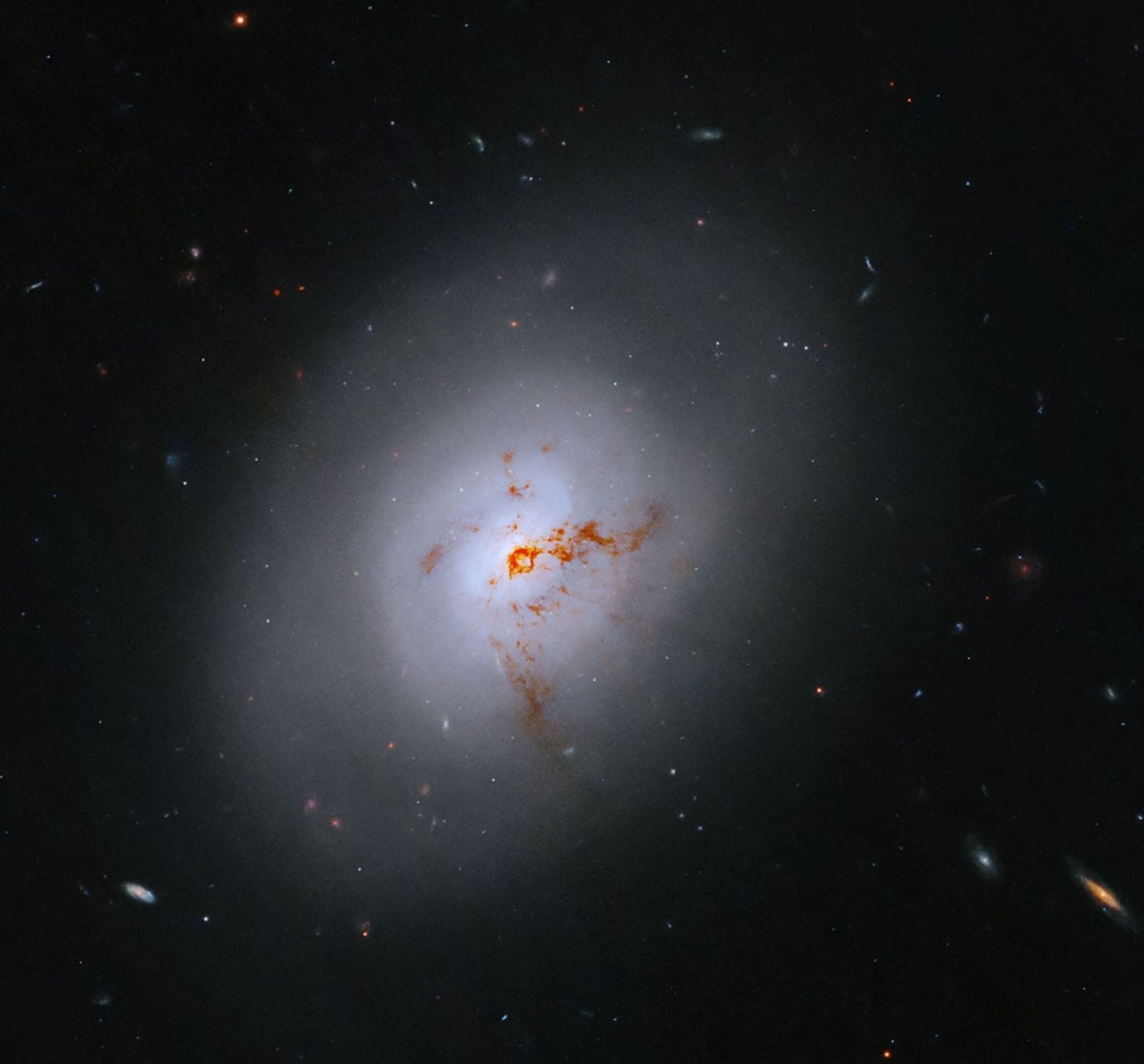
A galaxy that fakes spiral arms… but doesn’t have any
Did you know only about 1% of galaxies in our local universe belong to a rare category called “post-starburst” galaxies? NGC 1266 is one of them, and its backstory reads like a cosmic drama.
About 500 million years ago, astronomers believe NGC 1266 went through a minor merger with another galaxy. That collision did two things at once: it triggered an intense burst of new star formation, and it funneled huge amounts of gas toward the supermassive black hole at its center.
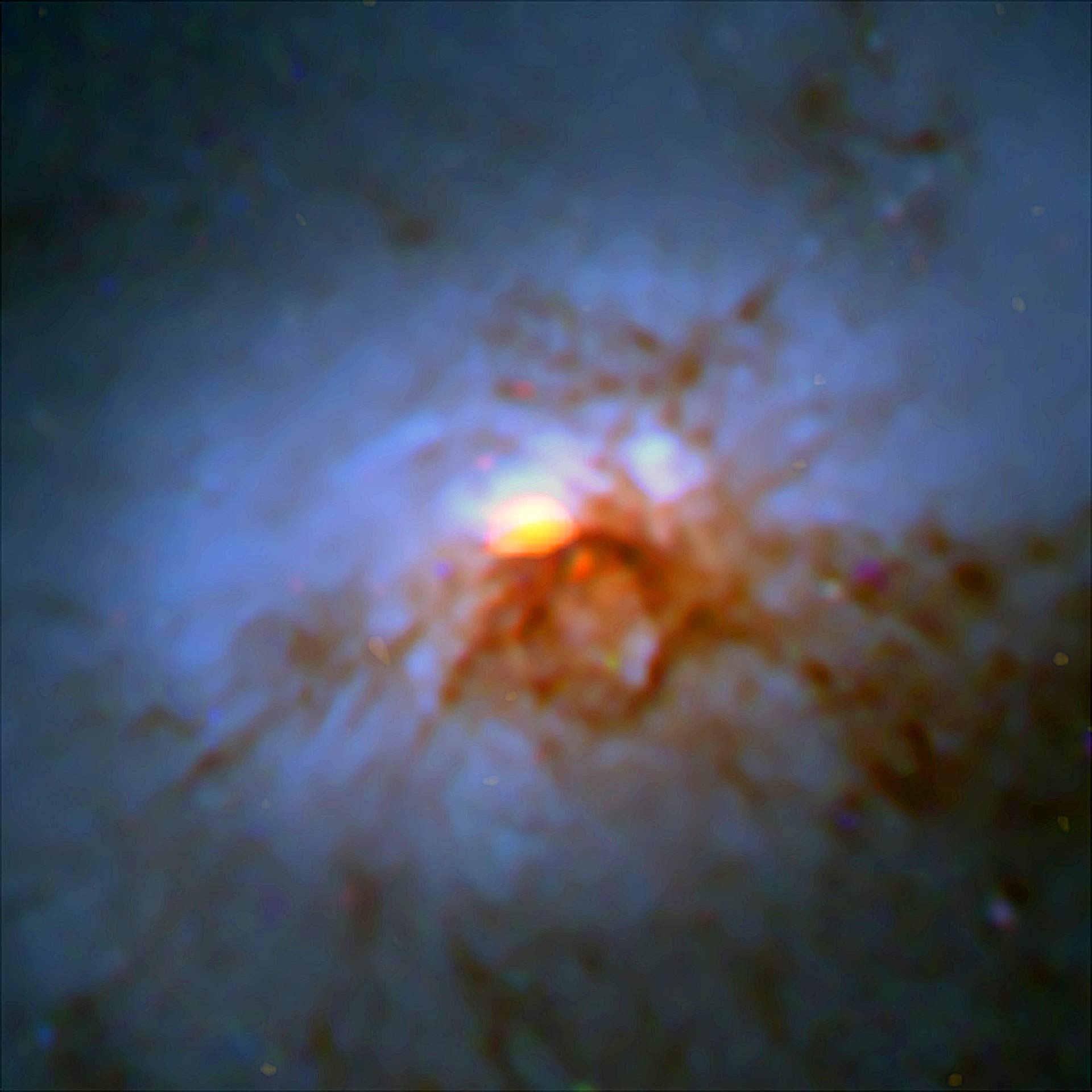
That gas “feast” woke the black hole up, turning it into what astronomers call an active galactic nucleus (AGN). And an active black hole doesn’t stay quiet — it generated powerful winds and jets of gas along its rotation axis.
The result, hundreds of millions of years later, is a galaxy that burned through most of its star-forming fuel and got wrapped in turbulence: the gas and dust between its stars are so disturbed they can no longer condense into new stars. Today, the few remaining “stellar nurseries” in NGC 1266 are confined to its core.
In other words: NGC 1266 is a galaxy caught at the exact moment a black hole “turned off the lights” on star formation. That makes it a perfect laboratory for astronomers studying how supermassive black holes suppress star birth in their host galaxies.
#SpaceFacts #NASA #Hubble #BlackHole #NGC1266 #Astrophysics #PostStarburstGalaxies #SpaceScience