
Can Animals Have Down Syndrome? The Truth Behind the Viral Myth
If you spend time on social media, you’ve probably come across photos of cats with wide-set eyes, dogs with oversized tongues, or oddly-featured tigers with captions reading: “this animal has Down syndrome.” The images go viral, people adore them, and nobody questions the diagnosis.
But there’s a problem: it’s not scientifically possible.
What Is Down Syndrome, and Why Is It Exclusive to Humans?
Down syndrome, also known as trisomy 21, is a genetic condition in which a person is born with an extra copy of chromosome 21. Humans have 23 pairs of chromosomes — 46 in total.
The scientific reality is clear: animals cannot have Down syndrome. This genetic condition is exclusively human. The reason? Every species has a completely different chromosomal structure.
Cats have 19 pairs of chromosomes and dogs have 39 pairs, making it impossible for either to carry an extra copy of human chromosome 21. That chromosome simply does not exist in their DNA.
So What Do Those Famous Animals Actually Have?
The confusion is entirely understandable: some animals display physical or behavioral traits that resemble those associated with Down syndrome. But the causes are different.
Real underlying conditions can include genetic mutations, birth defects, infections during pregnancy, or physical trauma — but never Down syndrome itself.
Some of the internet’s most famous cases:
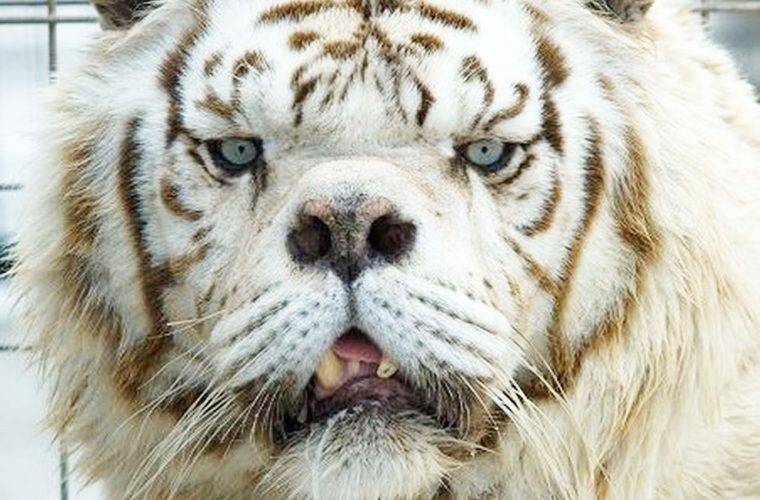
Kenny, the white tiger — Kenny lived at the Turpentine Creek Wildlife Refuge from 2000 until his death in 2008. His unusual appearance led millions to believe he had Down syndrome. However, genetic testing revealed chromosomal patterns entirely distinct from Down syndrome. His deformities were the result of inbreeding — the practice of mating related animals to preserve the white coat.
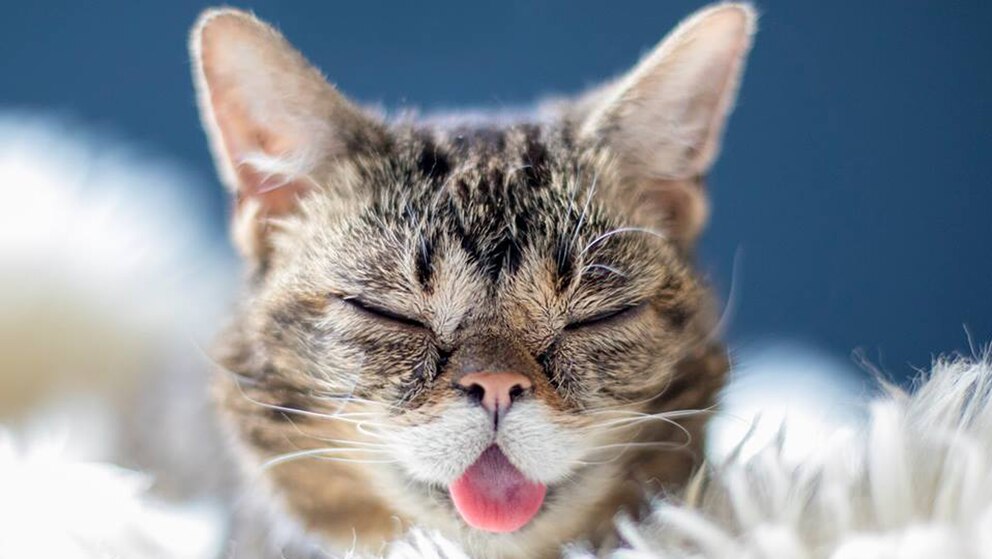
Lil Bub and Monty, the viral cats — Lil Bub had multiple genetic mutations, including dwarfism and extra toes. Her trademark tongue-out expression was due to her teeth never developing properly. Monty, on the other hand, was born with a chromosomal abnormality that affected his nasal bridge, giving him his distinctive flat-faced appearance. Adorable and one-of-a-kind — but not Down syndrome.
Is There Any Animal That Comes Close?
Yes, one: primates.
Chimpanzees are our closest genetic relatives. Scientists have documented cases of trisomy 22 in chimpanzees (the human equivalent being trisomy 21). These chimpanzees display some physical traits and behaviors similar to those seen in humans with Down syndrome, such as learning difficulties, physical differences, and social challenges. Even so, wild chimpanzees with these conditions rarely survive without human care.
What If My Pet Has Unusual Features?
Although dogs and cats cannot have Down syndrome, they can experience conditions with outwardly similar symptoms, such as growth abnormalities, developmental delays, and physical deformities.
There is no definitive test for Down syndrome in animals, since the condition is defined specifically as trisomy 21 in humans. However, genetic tests such as karyotyping can identify chromosomal abnormalities that may cause similar issues.
If your pet displays unusual characteristics, the best course of action is to consult a veterinarian. With proper veterinary care and support at home, pets with special needs can lead comfortable, happy lives.
What Is Real: The Love for These Animals
The fact that Kenny, Lil Bub, or Monty didn’t have Down syndrome doesn’t make them any less special. Their conditions were real, their stories were real, and the affection they inspired was real too.
The next time you see a viral photo of an animal with unique features, you’ll know the truth behind the headline — and now you also know how to better care for them.