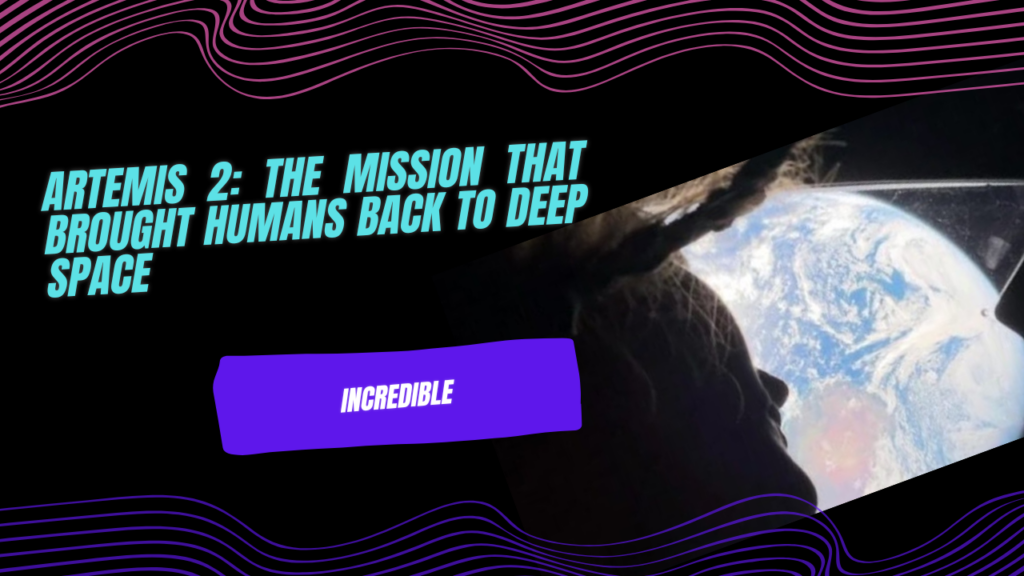
Humanity Returns to the Moon: Artemis 2 Completes TLI Burn and Sets Course for Our Satellite
After more than 50 years since Apollo 17, four astronauts are today traveling toward the Moon following a fully successful translunar injection burn.
The Artemis 2 mission represents the most significant milestone in crewed space exploration since the Apollo era. This is not merely a test flight — it is proof that humanity has recovered the technological capability, political will, and human courage to venture once again beyond low Earth orbit. On board are four astronauts who together hold a series of historic firsts never seen in more than six decades of crewed space exploration.
What Is the TLI Burn and Why Was It So Critical?
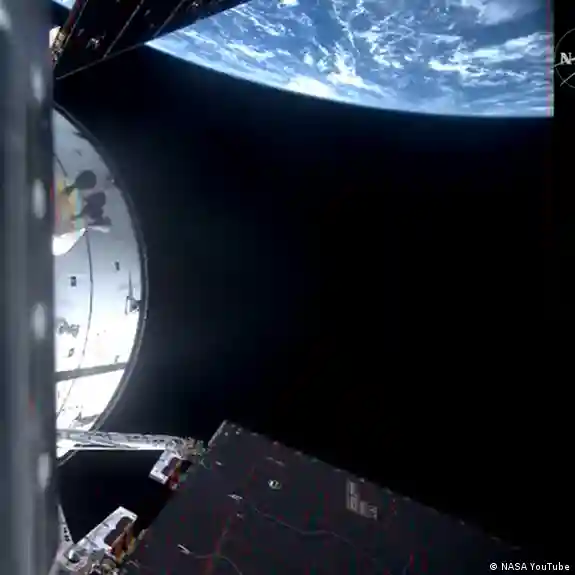
The Translunar Injection (TLI) maneuver is, technically speaking, the point of no return for any lunar mission. In simple terms, it is the engine firing that accelerates the spacecraft from its Earth orbit to the speed and trajectory needed to escape Earth’s dominant gravitational field and enter the Moon’s.
Unlike low Earth orbit — where an engine failure can be resolved with an emergency reentry — once Orion successfully executed the TLI, the mission trajectory was automatically set. No other major engine burn was required: orbital physics would take care of the rest.
“Our TLI burn, the one that sends us to the Moon, is also our reentry burn. The moment we executed that maneuver, we basically bought the rest of the mission.” — Christina Koch, NASA Astronaut, Artemis 2
This aspect makes the TLI a uniquely delicate maneuver: an error in burn duration, angle, or thrust could have sent the crew on an incorrect trajectory with no easy correction. For this reason, the mission management team waited more than 24 hours after launch to declare the spacecraft “fit” and give the green light for the procedure.
Orion Engine Technical Data
- Orion’s main engine was rescued and modernized from the Space Shuttle program, one of the most reliable in the history of space propulsion.
- Before Artemis 2, the engine had flown to space on 19 missions across three different shuttles.
- Its thrust level is equivalent to accelerating a car from 0 to 60 mph in 2.7 seconds.
- The TLI burn lasted exactly 5 minutes and 50 seconds, beginning at 23:49 UTC on April 2, 2026.
- Orion has three propulsion systems: the main engine, eight auxiliary thrusters on the European Service Module, and reaction control thrusters on the capsule itself.

The Four Astronauts Rewriting History
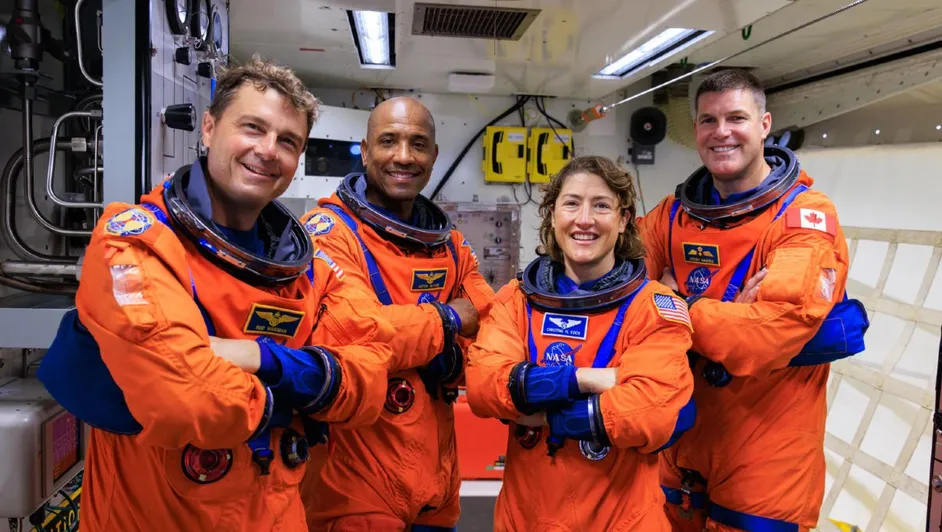
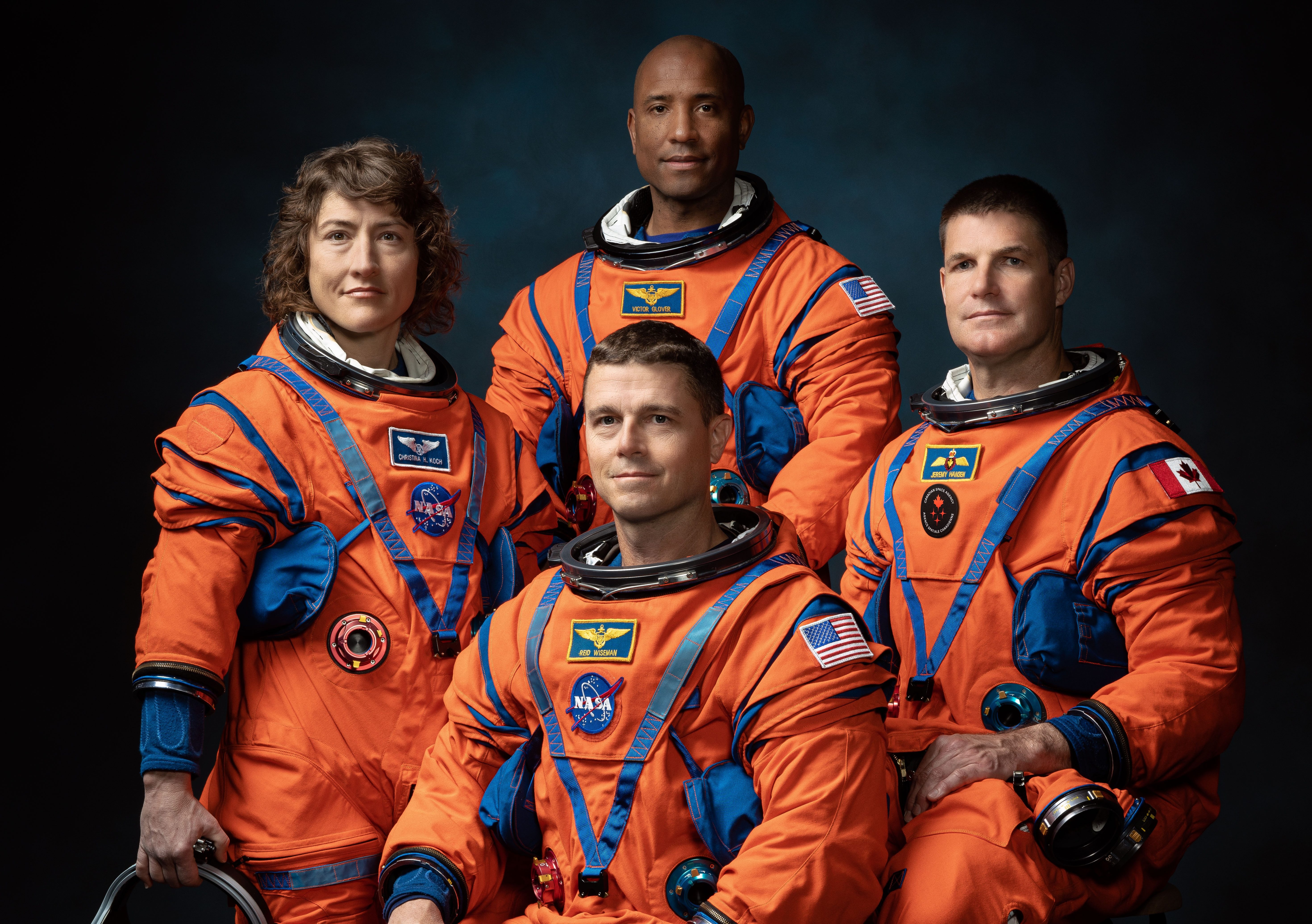
The Artemis 2 crew is not only extraordinary because of their destination. Each of the four members carries a historic title that no human being had ever held before.
- Reid Wiseman — Commander, NASA · USA
- Victor Glover — Pilot, NASA · USA
- Christina Koch — Mission Specialist, NASA · USA · First woman in lunar orbit
- Jeremy Hansen — Mission Specialist, CSA · Canada · First non-American
Christina Koch becomes the first woman in history to leave low Earth orbit, breaking a barrier that the 24 Apollo astronauts — all white men — never broke due to the simple biases of the era. Victor Glover is the first person of color to reach deep space. Jeremy Hansen, of the Canadian Space Agency, is the first non-American citizen to make this journey.
It was Hansen who spoke just after the TLI burn was completed, sharing words that resonated across all mission control centers and millions of screens around the world:
“Humanity has once again shown what we are capable of, and it is your hopes for the future that carry us now on this journey around the Moon.” — Jeremy Hansen, CSA Astronaut, Artemis 2 — After the TLI burn
From Kennedy Space Center to Deep Space: The Story of the Launch
The story of Artemis 2 formally began on April 1, 2026 — yes, April Fools’ Day — when NASA’s Space Launch System (SLS) roared from the launch pad at Kennedy Space Center in Florida, lifting the four astronauts and the Orion capsule into the night sky. The date choice generated more than a few jokes on social media, but NASA was clear: this was no joke.
It was the first time the SLS-Orion duo had flown with crew members. Their only previous mission together had been the uncrewed Artemis 1 flight in November 2022, which completed a distant lunar orbit demonstrating the reliability of the systems. Now, with four human lives on board, the stakes were exponentially higher.
Following launch, the crew spent more than 24 hours in low Earth orbit, conducting a thorough check of all capsule systems: flight suits, life support systems, flight computers, propulsion, and communications. Only when the mission management team was completely satisfied with the spacecraft’s condition did they authorize the TLI burn.
The Trajectory: What Happens on Board Each Day of the Mission
Once the TLI burn was completed, Orion left behind the relative comfort of Earth orbit and began its four-day journey to the Moon. The chosen trajectory is not a direct flight to the satellite, but a free-return trajectory: in the event of any serious emergency, orbital physics would bring the spacecraft back to Earth without the need for additional engine maneuvers. This was the same type of trajectory that saved the lives of the Apollo 13 astronauts in 1970.
- Day 1 — April 1: Launch from Kennedy Space Center. The SLS lifts off from Florida. Orion separates from the rocket and deploys its solar panels. Systems verification begins in low orbit.
- Day 2 — April 2: Orbital verification and TLI burn. After 24 hours of review, mission management gives the green light. At 23:49 UTC, Orion fires its main engine and leaves Earth orbit bound for the Moon.
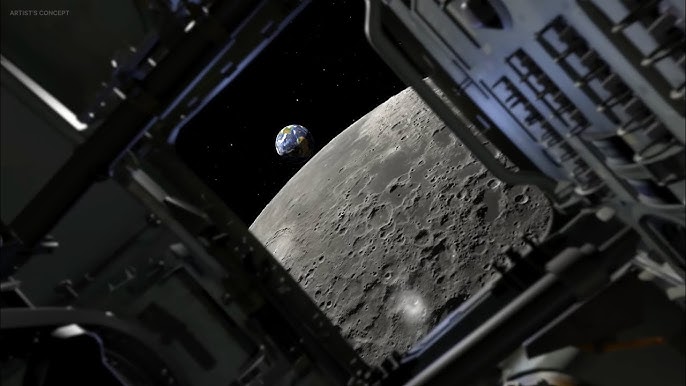
- Day 6 — April 6: Lunar flyby — New distance record. The Orion capsule flies around the Moon at approximately 6 hours and 30 minutes into Day 6. The four astronauts will surpass the historic distance record set by Apollo 13: 400,171 kilometers from Earth.
- Days 6–9: Return to Earth. Following the lunar flyby, the free-return trajectory carries Orion back to the planet. The crew conducts scientific observations and systems tests during the return journey.
- Day 10: Splashdown in the Pacific Ocean. Orion splashes down off the coast of San Diego, California. Recovery teams rescue the crew. If the mission is a complete success, the path opens toward Artemis 3 and the first Moon landing since 1972.
The Records Artemis 2 Will Break
Beyond the historic “firsts” in its crew composition, the Artemis 2 mission sets or extends a series of milestones that will be written into the history books of space exploration:
- First crewed mission to the Moon since Apollo 17 — December 1972 was the last time human beings traveled beyond low Earth orbit. More than 53 years have passed.
- First woman in lunar orbit — Christina Koch rewrites the history of gender in space exploration.
- First person of color in deep space — Victor Glover breaks a barrier that had persisted throughout the entire space age.
- First non-American citizen in lunar orbit — Jeremy Hansen of Canada expands the international dimension of space exploration.
- New human distance record from Earth — By surpassing Apollo 13’s 400,171 km, Artemis 2 will set the new maximum distance a human being has ever traveled from our planet.
- First crew aboard the Orion capsule and SLS rocket — the most powerful system ever built for human spaceflight, in its crewed debut.
The Context: From Apollo to Artemis, 50 Years of Pause
To understand the weight of what is happening, we must go back to December 11, 1972. On that day, the Apollo 17 lunar module Challenger touched down on the lunar surface in the Taurus-Littrow valley. Astronauts Eugene Cernan and Harrison Schmitt spent three days exploring the Moon. When Cernan climbed back into the module and closed the hatch, he did not know it would be the last time a human being set foot on the Moon in the 20th century… and for much of the 21st.
After Apollo 17, NASA’s budgets were drastically cut. Missions Apollo 18, 19, and 20 were cancelled. The Shuttle program, brilliant in many respects, was never designed to go beyond low Earth orbit. The Constellation program, which promised in the 2000s to return to the Moon, was cancelled in 2010. For decades, humanity orbited Earth — the International Space Station is a monumental achievement — but went no further.
The Artemis program, announced in 2017 and politically boosted from 2019, marks the definitive return. Its name is a mythological nod: Artemis was the twin sister of Apollo, goddess of the hunt and, symbolically, of the Moon. The inaugural uncrewed mission, Artemis 1, completed in November 2022 a 25-day flight around the Moon without astronauts, testing all critical systems. Now, Artemis 2 puts humans in the equation for the first time.

What Comes After Artemis 2? The Road to a Lunar Base
Artemis 2 is not the destination — it is the springboard. The mission fulfills an essential testing function: demonstrating that the Orion-SLS system can safely transport astronauts around the Moon and bring them back. If everything goes according to plan, the roadmap is ambitious:
Artemis 3 will be the landing mission: the first human landing on the lunar surface since 1972. The leading candidate for the historic honor is once again Christina Koch, who could also become the first woman to walk on the Moon. Artemis 3 will also incorporate SpaceX’s Starship Human Landing System as the lunar descent vehicle.
Artemis 4, projected for 2028, will add the Gateway to the system: a small lunar orbital space station that will serve as a logistical and scientific support point for future missions. Gateway is collaborative: ESA, JAXA, CSA, and other space agencies will contribute modules and equipment.
In the longer term, NASA’s and its international partners’ stated goal is to establish a permanent human presence on the Moon by the mid-2030s. This lunar base — likely located near the south pole, where deposits of frozen water exist as an enormously valuable resource — would also serve as a testing ground for the systems and procedures that will eventually carry humanity to Mars.

The SLS System and the Orion Capsule: The Technology Behind the Journey
Space Launch System (SLS) The SLS is the most powerful rocket ever built for crewed spaceflight, surpassing even the legendary Saturn V of the Apollo program. With a payload capacity to low Earth orbit of more than 95 metric tons in its Block 1 configuration, the SLS generates a liftoff thrust of approximately 39 million newtons, thanks to its four RS-25 engines — also recovered and modernized from the Shuttle program — and two solid rocket boosters.
Orion Capsule Orion is the crew capsule designed for interplanetary travel. With capacity for four astronauts, it incorporates a third-generation heat shield capable of withstanding the extreme temperatures of reentry from lunar speed, multiple redundant life support systems, and advanced avionics that allow a degree of autonomous flight. It is the most advanced crewed flight hardware NASA has ever built.
European Service Module (ESM) A critical and frequently overlooked component of the mission is the European Service Module, developed by the European Space Agency (ESA) and built by Airbus. The ESM provides main propulsion, solar power, thermal management, and propellant storage for the Orion capsule. Its contribution reflects the genuinely international character of the Artemis program.
Conclusion: The First Step of a Much Longer Journey
The Artemis 2 TLI burn, successfully executed on the night of April 2, 2026, is one of those moments that history will judge with clarity long before we finish processing it. Four astronauts are now aboard a capsule traveling through deep space, approaching a destination that no human being had reached in more than half a century.
They are not merely representatives of their countries or their agencies. They are representatives of the entire species: of unrelenting curiosity, of the capacity to dream beyond the visible horizon, and of the tenacity to turn those dreams into equations, materials, and fuel. They are proof that humanity, when it collectively sets its mind to something, can surpass its own limits.
The Moon is waiting. And this time, we are coming to stay.