Flies Fossilized 40 Million Years Ago While Mating: The Incredible Discovery in Australian Amber That Rewrites History
Imagine if, at the most intimate moment of your life, time stopped forever. That is exactly what happened to two flies approximately 41 million years ago in what we now know as Australia. Trapped in amber while mating, these tiny creatures were suspended in time, becoming one of the most astonishing and rare fossils ever discovered in the southern hemisphere.
But this story goes far beyond a curious anecdote. It is a paleontological discovery that is shaking the very foundations of what we know about the evolution of life in Australia, the supercontinent Gondwana, and the history of our planet’s terrestrial ecosystems. Keep reading — because this is fascinating.
What Is Amber, and Why Is It So Valuable to Science?
Before diving into the discovery itself, it’s important to understand why amber is considered, in the words of scientists themselves, the “Holy Grail” of paleontology.
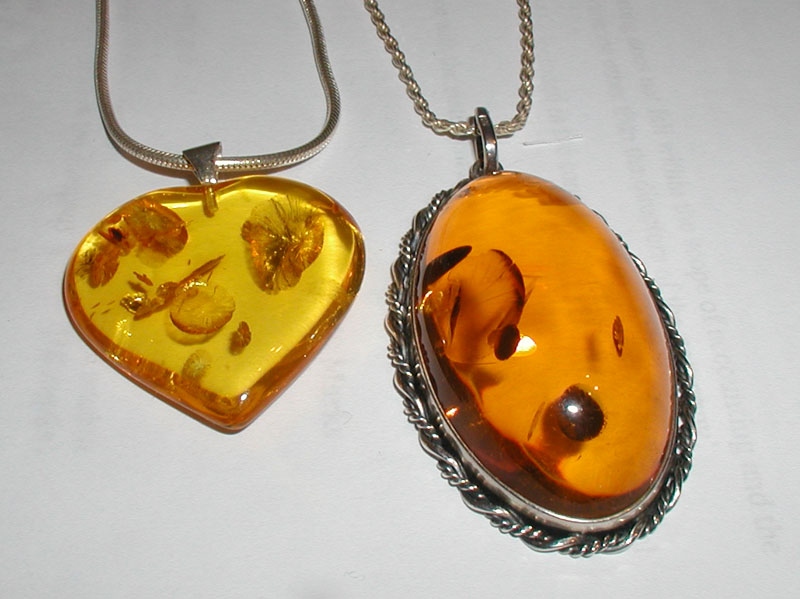
Amber is fossilized resin from prehistoric trees. When an insect, plant, or other organism became trapped in that sticky resin, the material would slowly harden over millions of years, sealing the organism inside with near-perfect precision. This is not a simple impression or mold like most fossils: amber preserves the creature exactly as it was, in three dimensions, with microscopic details intact.
According to Dr. Jeffrey Stilwell, who led the study, amber is considered the Holy Grail of the discipline because organisms are preserved in a state of suspended animation in perfect 3D space, looking exactly as if they died yesterday, when in reality they are millions of years old.
This preservation capability makes amber incomparably more valuable than other types of fossils for studying behaviors, colors, internal structures, and relationships between ancient species.
Amber Is Extremely Rare in the Southern Hemisphere
If you’ve seen the film Jurassic Park, you probably remember that amber containing trapped mosquitoes was central to the entire plot. In reality, the vast majority of fossiliferous amber known to the world comes from the northern hemisphere — particularly from regions such as the Baltic, Myanmar (Burma), Canada, and northern Europe.
Nearly all amber records come from the northern hemisphere, with very few from the south, which makes this discovery in Australia extraordinarily unusual.
Australia, Tasmania, and New Zealand are not regions where paleontologists would expect to find large quantities of fossilized amber. That is why, when Dr. Stilwell’s team from the School of Earth, Atmosphere and Environment at Monash University in Melbourne began their excavation, no one imagined the scale of what they were about to unearth.
The Discovery: 5,800 Pieces of Amber and a Prehistoric Treasure
The excavation yielded 5,800 pieces of amber from sites in southeastern Australia, Tasmania, and New Zealand, including fossilized ants, wingless hexapods known as slender springtails, liverworts, biting midges, flies, and spiders.
The pieces were recovered from two main sites:
- The Macquarie Harbour Formation in Tasmania
- The Anglesea coal deposit in Victoria, Australia
The extraction method was anything but delicate: after the coal mine site was cleared by bulldozers, Dr. Stilwell and his team used heavy machinery to recover the thousands of invaluable amber fragments. Today they have an entire shipping container filled with amber-embedded coal still waiting to be analyzed.
The Flies That Refused to Part: The Star Fossil
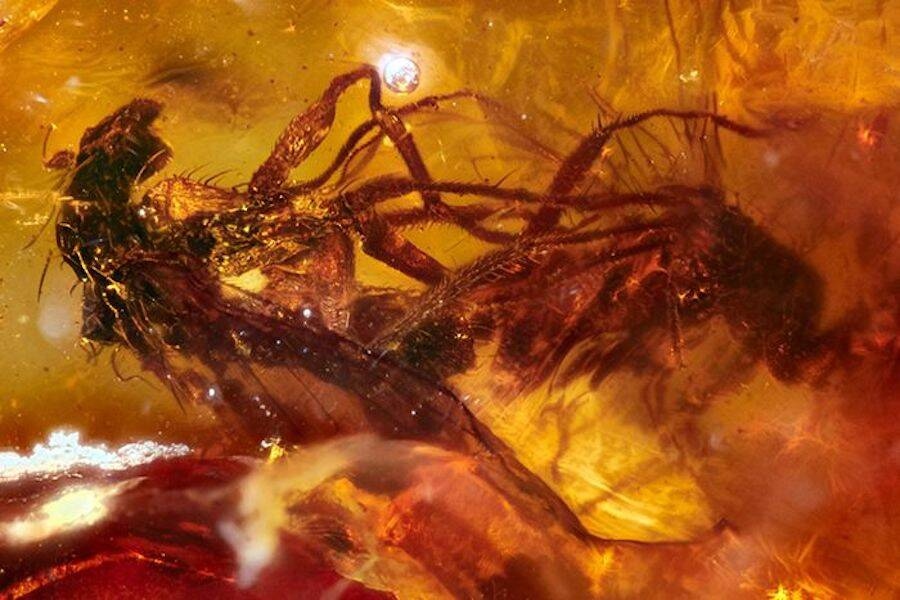
Without a doubt, the most striking piece in the entire collection is the pair of flies caught in the act of mating.
The two copulating flies date back between 40 and 42 million years and come from an era when Australia was still part of the supercontinent Gondwana. They are considered strong candidates for the first mating behavior ever frozen in Australia’s fossil record.
Think about it for a moment: 40 million years ago, long before the first modern humans appeared on Earth, two flies were sealed for eternity at the most vulnerable and intimate instant of their lives. And today, we are looking at them.
Ken Walker, Senior Curator of Entomology at Museums Victoria, put it perfectly: “Imagine having a pair of mating flies from millions of years ago.”
The Ant Nobody Expected to Find
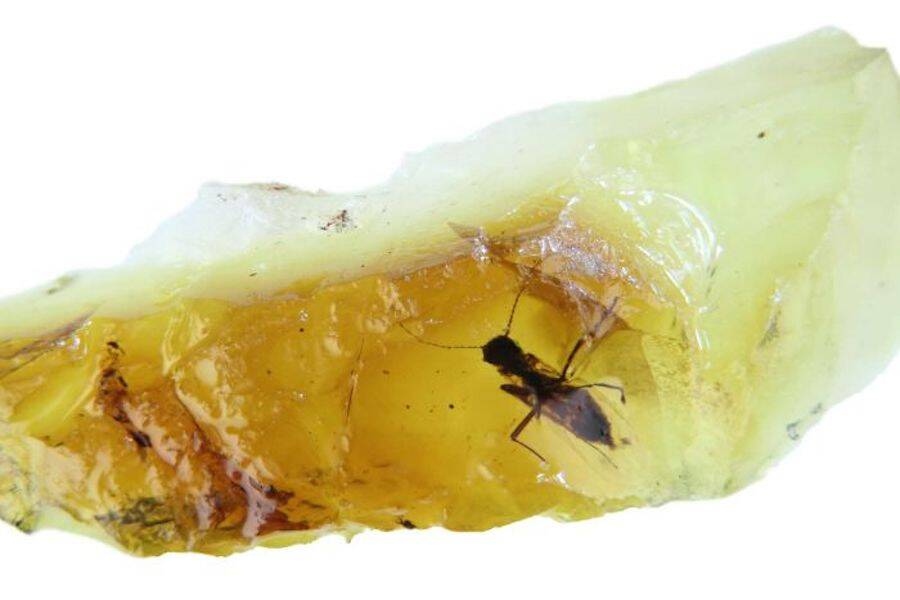
While the mating flies grabbed the headlines, another find from this excavation left scientists equally stunned: the first fossilized ant ever discovered in Australia.
Dr. Stilwell expressed his amazement, noting that in over 100 years of studying fossils in Australia, not a single fossilized ant had ever been found.
The implications of finding one now are enormous. Ant species preserved in amber have a direct connection to ant groups alive today, demonstrating that most major insect groups had already diversified during the Gondwana era.
In other words, the ants walking through your garden today are essentially the same ones that existed more than 40 million years ago. Evolution, in this case, virtually came to a standstill.
The Supercontinent Gondwana: The Context That Changes Everything
To understand the significance of these fossils, we need to talk about Gondwana — the supercontinent that once joined what are today Australia, South America, Africa, Antarctica, India, and Arabia.
Between 40 and 50 million years ago, Australia was still connected to Antarctica in the final stages of the Gondwana supercontinent. Studying the organisms that lived in this region of the world during that era allows us to reconstruct what life was like when the modern continents were still taking their current shape.
This also explains why the team found such a variety of organisms in the Australian amber that bear similarities to species from other parts of the world — they all shared the same continental home in that distant age.
What Else Was Found in the Amber?
Beyond the celebrated flies and the historic ant, the excavation produced an impressive inventory of prehistoric life:
At the Tasmanian site, a complete mite and an insect known as a “felt scale” were found, dating back between 52 and 54 million years — among the oldest organisms in the entire collection.
At the Victorian site, in addition to the flies and the ant, a new species of delicate moss was discovered, estimated at approximately 42 million years old and preserved in its entirety.
Also recovered were biting midges, springtails (microscopic wingless hexapods), liverworts (primitive plants), and possibly spiders in various states of preservation.
Why This Discovery Is “One of the Greatest in Australian Paleontology”
Dr. Stilwell did not hesitate to describe the findings as one of the greatest discoveries in Australian paleontology, adding that these are the oldest animals and plants in amber from the entire southern supercontinent of Gondwana.
Paleontologist Trevor Worthy of Flinders University also praised the work, highlighting that the findings demonstrate that Australasia holds a variety of ancient and very ancient amber deposits, with significant potential for future discoveries of fossilized invertebrates and plants.
The scientific impact is far-reaching. It fills gaps in the southern hemisphere’s fossil record, which until now was nearly a blank page compared to the north. It confirms the antiquity of modern insect groups, showing that many living species have remained essentially unchanged for tens of millions of years. It opens a window into Gondwana’s ecosystems, allowing researchers to study what life was like in the region before the continents took their current form. And it establishes Australia as a potentially far richer source of fossil amber than previously thought.
A Container Full of Possibilities
Most exciting of all: this is only the beginning. The team currently has an entire shipping container filled with amber-embedded coal still waiting to be analyzed.
Stilwell is optimistic about what lies ahead, noting that the findings offer new and exciting perspectives on the origin, antiquity, and evolution of Australia’s modern biota, and suggest that enormous potential exists for future similar discoveries across Australia and New Zealand. He also added that they are only just getting started, and there is so much still to learn.
Time, Frozen
There is something deeply philosophical about this discovery. Two flies, 41 million years ago, lived a fleeting moment of life. They had no way of knowing that moment would last forever. They had no way of knowing that millions of years later, beings that didn’t even exist in their time would be observing them, studying them, and marveling at their existence.
Amber doesn’t just preserve bodies. It preserves moments. And that may be its most extraordinary power of all.
The next time a fly buzzes around you and you feel the urge to swat it away, remember: its ancestors have been inhabiting this planet for over 40 million years — long before we ever arrived to consider ourselves its owners.