
Native Americans Invented the Game of Dice 12,000 Years Ago
When we think about the origins of dice, almost everyone imagines Egypt, Mesopotamia, or ancient China. But a study published in April 2026 in the journal American Antiquity overturns that assumption: Native Americans were deliberately making and using dice more than 12,000 years ago, making the American continent the birthplace of organized gambling — and of probabilistic thinking.
A Discovery That Rewrites the History Books
Robert J. Madden, a researcher at Colorado State University, is the author of the study. His conclusion is unambiguous: historians have long treated dice and probability as inventions of the Old World, but the archaeological record tells a very different story. Native American groups were crafting objects deliberately designed to generate random outcomes and using them in structured games thousands of years earlier than anyone had thought.
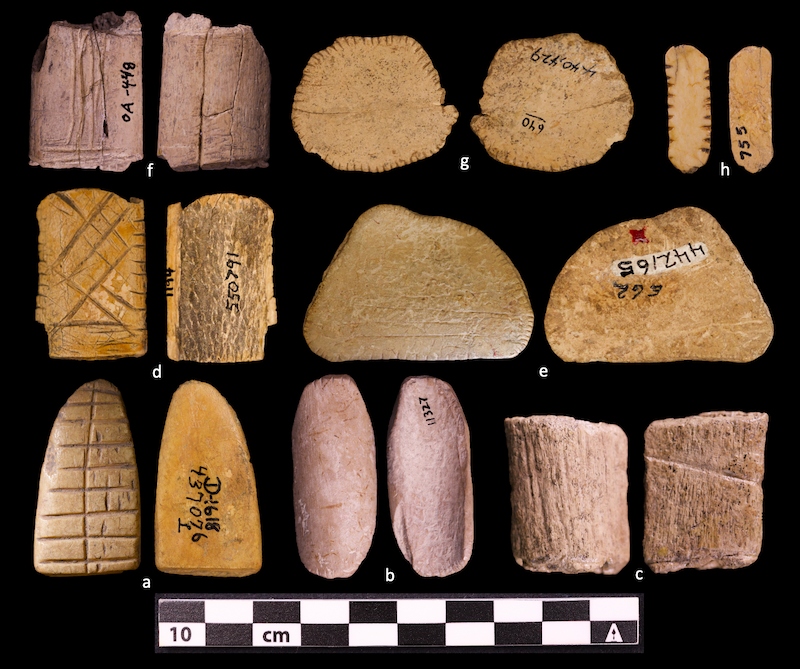
The oldest dice identified came from archaeological sites in Wyoming, Colorado, and New Mexico, dated to the Folsom Period — between 12,800 and 12,200 years ago, at the close of the last Ice Age.
What Did These Prehistoric Dice Look Like?
Nothing like the six-sided dice we know today. These were flat, oval or rectangular pieces, hand-carved from bone or wood. They are known as binary lots because when tossed, they could only land in one of two ways: marked side up or marked side down.
Each piece had markings, burn marks, or painted designs on one face — the “counting” side. Players would toss them from a basket, and the outcome depended on how many marked faces landed face up. Madden describes them as simple and elegant tools, but unmistakably intentional. They are not accidental byproducts of bone-working. They were made to generate random outcomes.
The Method: Over 600 Dice Identified Across 57 Sites
To reach these conclusions, Madden built a set of defining criteria by studying 293 documented historical Native American dice sets recorded by ethnographer Stewart Culin in 1907. Using that framework, he reviewed archaeological databases and collections across the continent.
The result: he identified more than 600 dice at 57 archaeological sites spread across 12 states, spanning from the earliest Paleo-Indian inhabitants through the pre-contact period with Europeans. The evidence shows that highly diverse cultures, with very different ways of life and subsistence, all made use of these objects. What was missing was not the evidence itself, but a clear continental standard for recognizing what was right in front of researchers all along.
Not Just a Game — A Social Technology
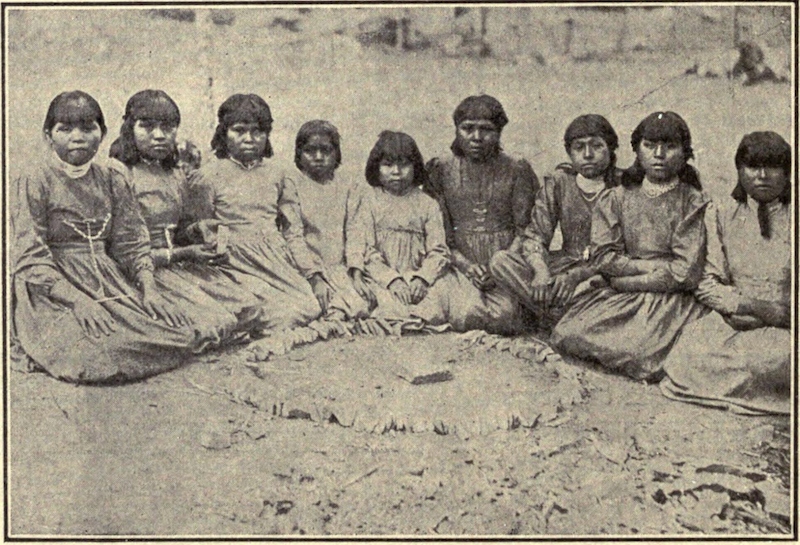
One of the study’s most fascinating revelations is the role these games played beyond entertainment. Gambling and games of chance created neutral, rule-governed spaces where distinct groups could interact, exchange goods and information, forge alliances, and manage uncertainty. In that sense, they functioned as powerful social technologies.
A game was a genuine collective event: there were always two main players, a referee, scorekeepers, and an animated crowd gathered around, with side bets in play throughout. The rules could be complex and varied between cultures, but the basic mechanics were universal enough that different groups could play against one another.
The Origin of Probabilistic Thinking Is in the Americas
Perhaps the most revolutionary point of the study is its philosophical implication. Madden argues that when human beings begin making dice, we are seeing the first evidence that people were starting to understand and harness the concepts of randomness and probability — and not just understand them, but use them to create conditions of equality between people.
Until now, it was assumed that this cognitive leap had taken place in the Old World during the Bronze Age, roughly 6,000 years ago. This study demonstrates that Native Americans achieved it 6,000 years earlier. If we want to understand the true history of probabilistic thinking, we now have to look to the New World, at the end of the last Ice Age.

Madden’s discovery is not merely archaeological: it is an invitation to rethink which civilizations contributed to the development of human thought. Native Americans were not just playing dice. Without knowing it, they were laying the foundations of modern mathematics.