What is the Andromeda Galaxy?
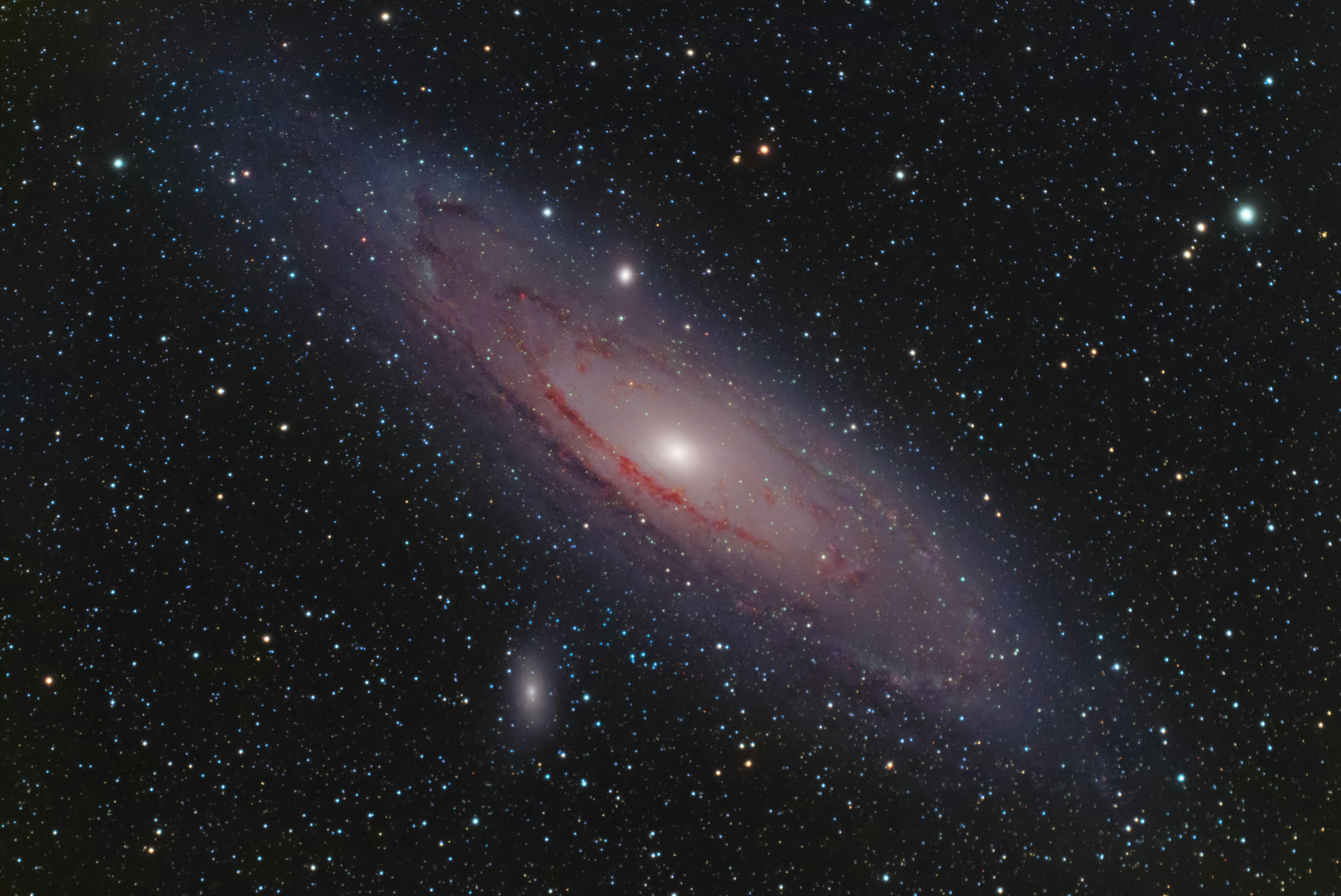
The Andromeda Galaxy, scientifically known as Messier 31 or M31, is the largest spiral galaxy in our Local Group and the closest neighbor to our Milky Way. With more than one trillion stars inside it, Andromeda is approximately twice as large as our own galaxy and represents one of the most fascinating objects in the observable universe.
Its name comes from the Andromeda constellation, in whose direction it can be observed from Earth. In fact, it is one of the few extragalactic objects visible to the naked eye under ideal dark-sky conditions, appearing as a faint, elongated smudge in the night sky.
How far is Andromeda from Earth?
The Andromeda Galaxy is located approximately 2.537 million light-years from Earth. To put that number in perspective: if we could travel at the speed of light, it would take us more than two and a half million years to reach it.
However, despite that astronomical distance, Andromeda is moving directly toward us at an approximate speed of 110 kilometers per second. Every second that passes, this giant galaxy gets a little closer to the Milky Way.
The history of Andromeda’s discovery
For centuries, astronomers observed Andromeda without understanding its true nature. It was known simply as the “Great Andromeda Nebula”, and was believed to be a cloud of gas and dust located within our own galaxy.
It wasn’t until 1925 that astronomer Edwin Hubble, using the telescope at the Mount Wilson Observatory, proved that Andromeda was actually a completely separate galaxy, located far beyond the boundaries of the Milky Way. This discovery revolutionized modern astronomy and forever transformed our understanding of the universe.
From that moment on, it became clear that the cosmos was vastly larger than any scientist had imagined, and that the Milky Way was just one of billions of galaxies in the observable universe.
The great collision: When will Andromeda collide with the Milky Way?
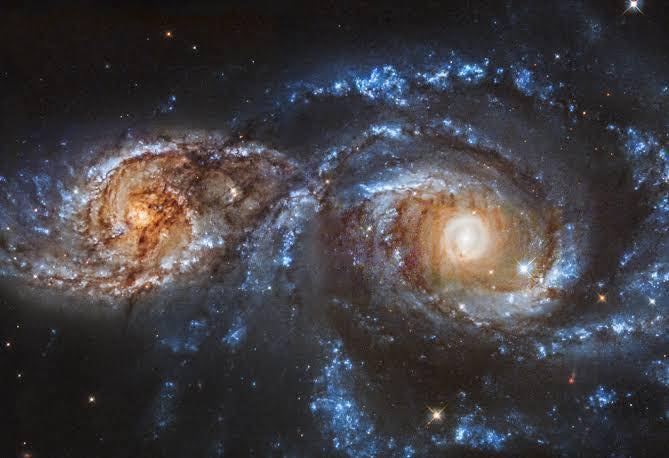
This is, without a doubt, the most striking fact about Andromeda. Astronomers at NASA and other space agencies have calculated with great precision that in approximately 4.5 billion years, the Andromeda Galaxy and our Milky Way will collide and begin to merge in a process that will last hundreds of millions of years.
This galactic collision will be one of the most spectacular events in the universe, and its consequences will completely transform the structure of both galaxies.
What will happen during the collision?
When two galaxies collide, the result may seem catastrophic, but in reality it is a far more surprising process than you might imagine:
Stars will not collide with each other
Although the collision will involve billions of stars, almost none of them will directly collide with another. Why? Because the space between stars is so enormously vast that the probability of a direct collision is practically zero. The two galaxies will pass through each other like ghosts, and the stars will simply shift their orbits.
Millions of new stars will be born
The collision will compress enormous clouds of interstellar gas, triggering a massive explosion of star formation. Millions of new stars will be born as a direct result of this galactic merger, lighting up the cosmos like never before.
A new galaxy will form: Milkomeda
The final result of this merger will be a completely new galaxy, which scientists have already named “Milkomeda” (a combination of Milky Way and Andromeda). This new galaxy will have an elliptical shape, very different from the spiral structures of its parent galaxies.
What will happen to our Solar System?
One of the most frequently asked questions about this collision is what will happen to Earth and our solar system. The answer is less dramatic than expected:
- Our solar system will most likely not be destroyed during the collision.
- It will most probably be launched into a new orbit within the merged galaxy, possibly toward more peripheral regions.
- Life on Earth, if it still existed, would not be directly affected by the galactic collision.
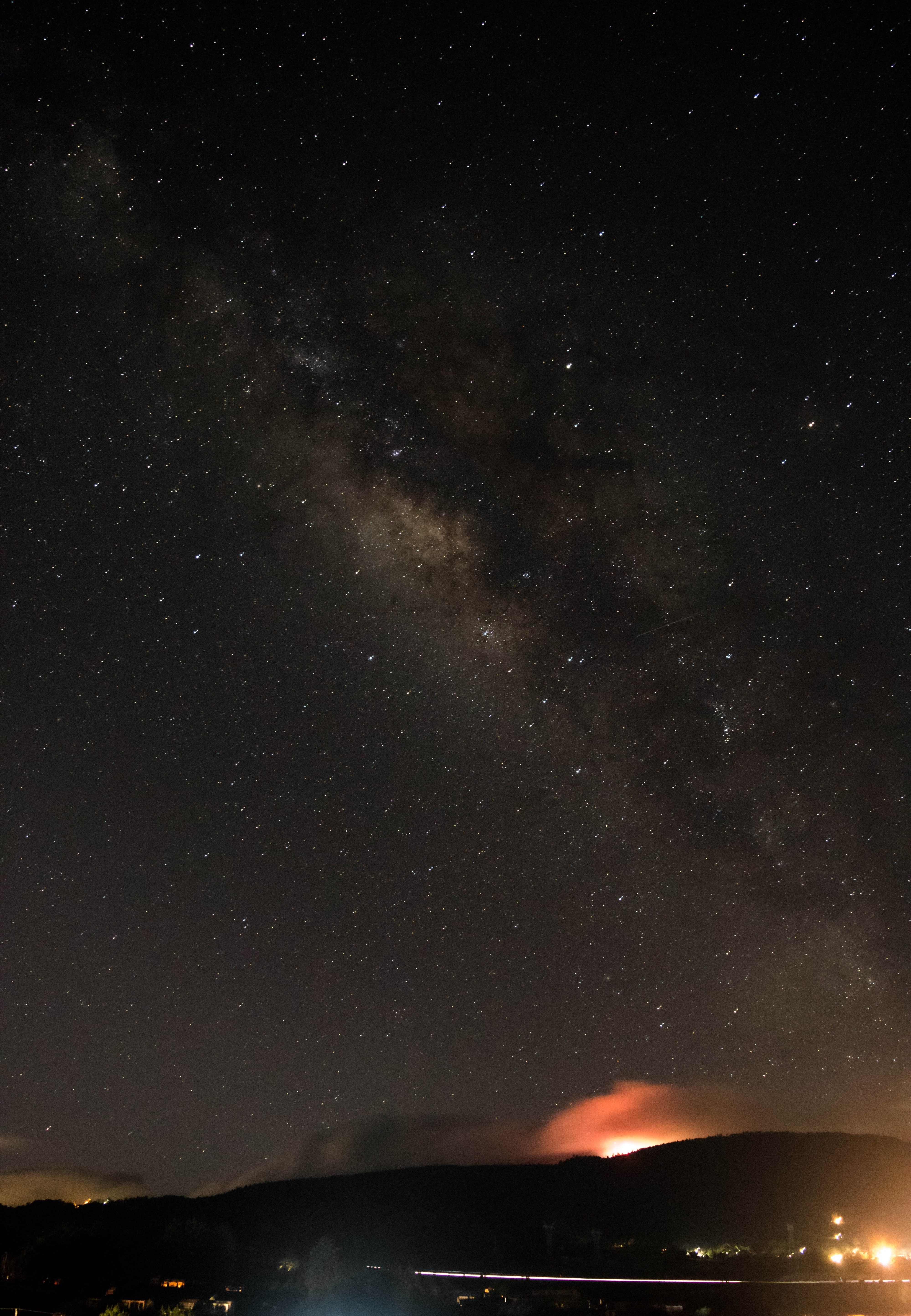
However, the night sky would look radically different. Instead of the faint band of the Milky Way we know today, the sky would be filled with millions of bright stars in every direction, creating an incomparable visual spectacle.
What will Andromeda look like in the future sky?
As billions of years pass and Andromeda progressively approaches, its appearance in the night sky will change dramatically:
- In about 2 billion years, Andromeda will begin to appear significantly larger in the sky.
- When the collision is at its peak, it will occupy an enormous portion of the firmament, with bright streaks of stars and nebulae visible to the naked eye.
- Eventually, both galaxies will blend into the new elliptical galaxy Milkomeda.
Why study the Andromeda Galaxy?
For astronomers, Andromeda is a privileged window into the universe. Being the closest spiral galaxy similar to our own, it allows us to study in detail processes that occur within the Milky Way but are difficult to observe from the inside.
Thanks to the study of Andromeda, scientists have been able to:
- Better understand the formation and evolution of spiral galaxies.
- Study the distribution of dark matter within a galaxy.
- Observe globular clusters and star-forming regions in detail.
- Improve models about the future of the universe and the dynamics of galactic groups.
Conclusion: The universe has its own plans
The Andromeda Galaxy reminds us of something fundamental: the universe is dynamic, alive, and in constant change. What today seems eternal and unchanging, on cosmic timescales, is nothing more than a fleeting instant.
The collision between Andromeda and the Milky Way is not the end of anything — it is the beginning of something entirely new. A new galaxy, a new sky, and perhaps new forms of life contemplating that transformed firmament.
The cosmos waits for no one. Andromeda is already on its way. The question is: will anyone be here to see it?
Resources & References
- NASA Hubble Site: hubblesite.org
- European Space Agency (ESA): esa.int
- SEDS Messier Database: messier.seds.org