What is Tylosaurus rex and why is it shaking up paleontology?
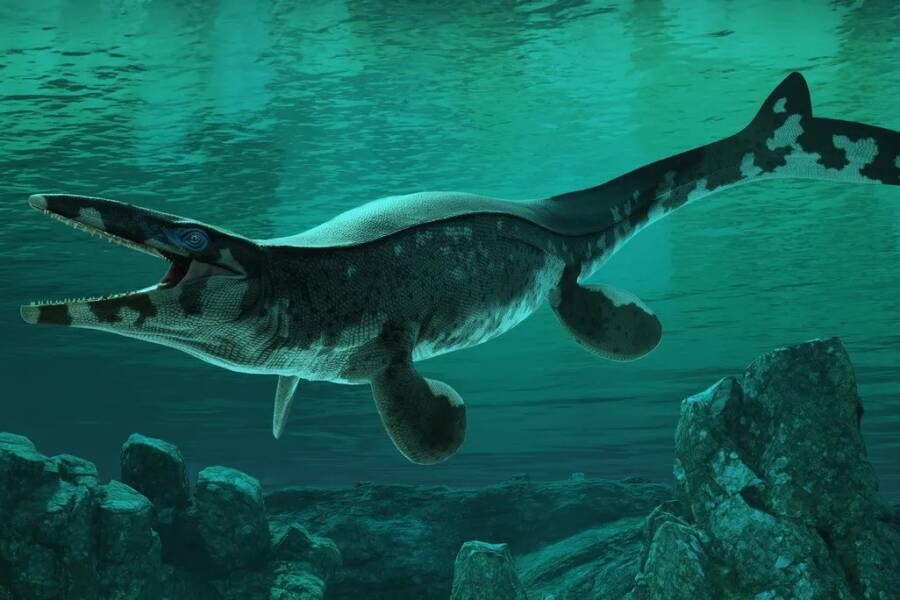
If you thought Tyrannosaurus rex was the most terrifying predator of the dinosaur age, get ready to meet its marine equivalent: Tylosaurus rex, a newly described mosasaur species identified by scientists from the American Museum of Natural History, the Perot Museum of Nature and Science, and Southern Methodist University.
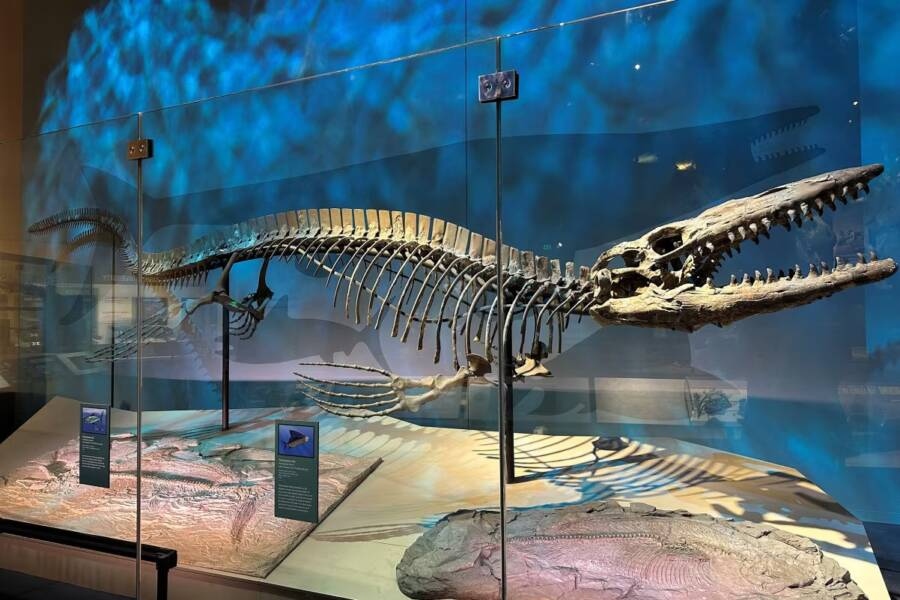
This prehistoric giant measured up to 43 feet (13 meters) in length and ranks among the largest mosasaurs ever discovered. To put it in perspective: it was roughly twice the length of the largest great white sharks ever recorded.
A discovery hiding in museum drawers for decades
The story behind this find is worthy of a movie. It all started in 2020, when Amelia Zietlow, then a doctoral student at the American Museum of Natural History, was examining mosasaur specimens in the collection. A large fossil unearthed in Texas during the 19th century — which she nicknamed “Beefcake” for its size — caught her attention. “I had never heard of Tylosaurus being found in Texas before,” she said. “Typically, they’re found in Kansas and South Dakota, so that stood out to me.”
The teeth were too serrated. The bones were too big. She was right: the animal in front of her, along with more than a dozen fossils scattered across other institutions, turned out to be a completely different beast. A bigger one.
The features that make it unique (and terrifying)
Serrated teeth — A rarity among mosasaurs
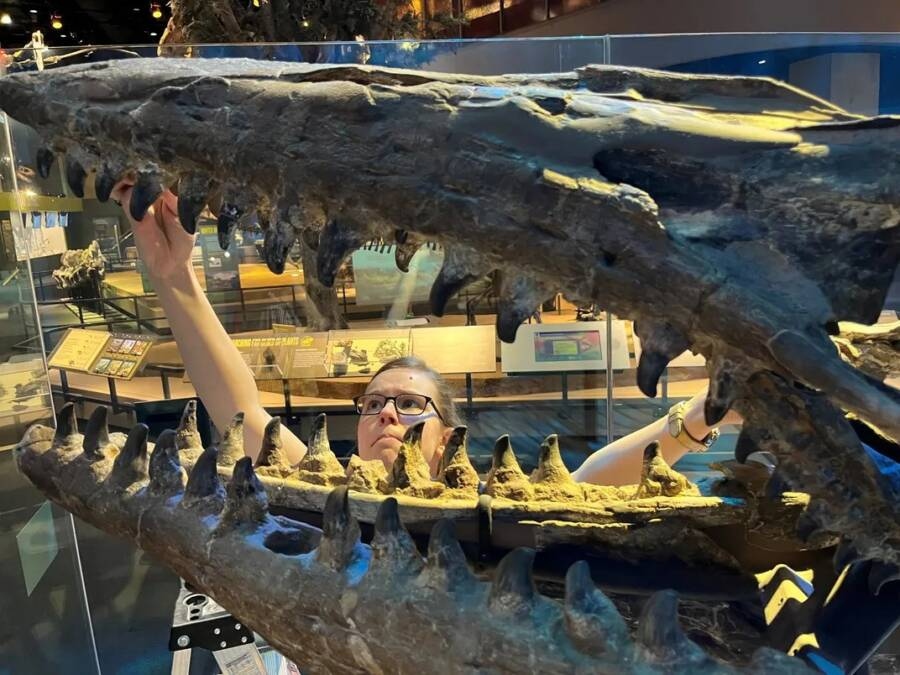
The teeth of Tylosaurus rex were finely serrated, a trait identified as uncommon among mosasaurs. This serration suggests the teeth were calibrated to inflict particularly severe damage on the animals it hunted, in a way that the simpler conical teeth of most other mosasaurs could not.
Built for strength and aggression
Beyond its enormous size, researchers believe Tylosaurus rex was built for strength and aggression, with adaptations linked to especially powerful jaw and neck muscles.
Evidence of intraspecific violence
“Besides being huge, T. rex appeared to be a much meaner animal than other mosasaurs,” said Ron Tykoski, vice-president of science at the Perot Museum. “Through our study and examination of well-preserved fossils collected throughout the north Texas region, we have evidence of violence within this species to a degree not previously seen in other Tylosaurus specimens.” Researchers believe these injuries were caused by clashes between individuals of the same species, possibly over territory or food.
Was it a dinosaur? The most common misconception
Not at all! Despite sharing the “T. rex” nickname, Tylosaurus rex was not a dinosaur like Tyrannosaurus rex. Instead, it was a prehistoric marine predator that dominated underwater ecosystems covering much of North America during the age of dinosaurs. Mosasaurs shared closer evolutionary relationships with lizards and snakes than with dinosaurs.
Where did Tylosaurus rex live?
The animal lived approximately 80 million years ago in the warm shallow seaway that, during the Late Cretaceous, divided North America into eastern and western halves. Its fossils were found primarily in northern Texas.
A name that honors a forgotten visionary
Researchers chose the name Tylosaurus rex as a tribute to paleontologist John Thurmond. In the late 1960s, Thurmond recognized that giant tylosaurs from northeast Texas appeared unusually large and may have belonged to a separate species. He informally referred to them as “Tylosaurus thalassotyrannus,” meaning “sea tyrant.” The proposal never made it into formal publication. His intuition waited more than half a century to be validated.