Imagine a planet where it rains molten iron. Another where sunrise and sunset are so different they feel like two separate worlds. One that orbits the remains of a dead star and might rain diamonds. And another that could be entirely covered by a global ocean — with a chemical signal that, on Earth, is produced almost exclusively by life.
This isn’t science fiction. These are real planets, light-years away, currently being studied with some of the most advanced telescopes ever built, including the James Webb Space Telescope.
In this article, we walk through the five strangest and most fascinating exoplanets discovered so far, backed by verified data and the science behind each finding.
What Is an Exoplanet?
An exoplanet is simply a planet orbiting a star other than our Sun. The first one was confirmed in 1992; today we know of more than 6,000.
For decades, actually seeing one was nearly impossible — a star’s brightness completely overwhelms its planet, like trying to spot a firefly next to a stadium floodlight. The breakthrough came with a technique called transit spectroscopy: as a planet passes in front of its star, a tiny fraction of starlight filters through its atmosphere. Instruments like the James Webb break that light apart like a prism, and each molecule — water, methane, iron — leaves a distinct chemical fingerprint. It’s literally reading a planet’s ingredient list from thousands of light-years away.
1. WASP-76b — The World Where It Rains Molten Iron
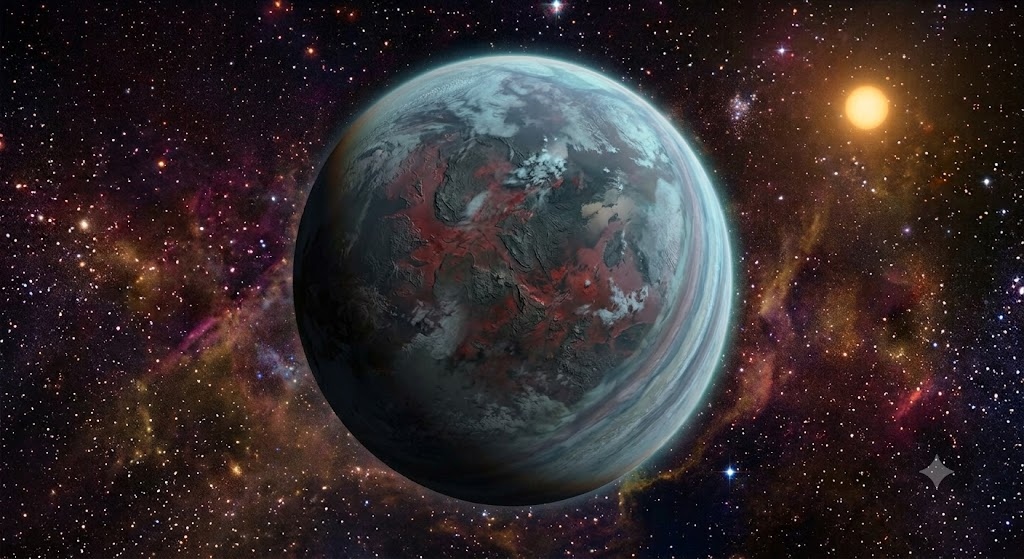
640 light-years from Earth, in the constellation Pisces, sits WASP-76b — a planet where daytime temperatures exceed 2,400°C. Iron doesn’t just melt there (it melts at 1,538°C); it evaporates.
The planet is tidally locked to its star, so one hemisphere receives constant light while the other stays in permanent darkness. Winds of up to 18,000 km/h carry iron vapor from the scorching dayside to the nightside, where temperatures drop enough for it to condense — and rain down as iron.
This “iron rain” was detected using the ESPRESSO instrument on the Very Large Telescope (VLT) at the European Southern Observatory, in research led by the University of Geneva alongside Spain’s Center for Astrobiology. It’s worth noting that later Hubble observations found that light from a companion star had distorted part of the original signal, so the scientific community is still refining the exact model of the phenomenon. James Webb has also studied this planet, alongside other instruments, helping map its chemistry in greater detail.
2. WASP-121b — A Planet With Two Atmospheres
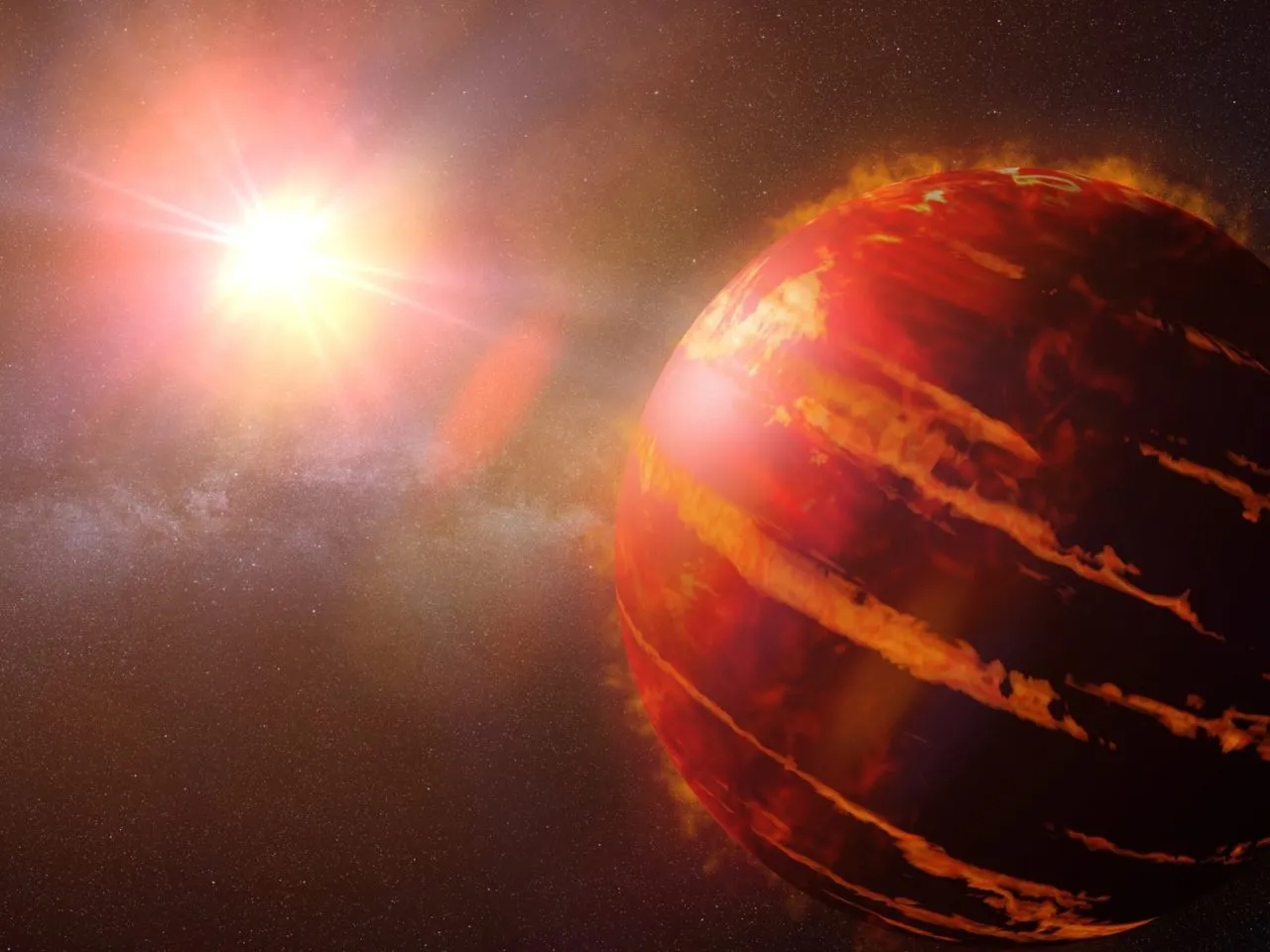
WASP-121b is an ultra-hot gas giant that completes an orbit around its star in under 30 hours. The side facing the star reaches nearly 2,500°C.
The surprising part, published in Nature Astronomy, is that James Webb detected radically different atmospheric properties between this planet’s sunrise and sunset edges — one side heats up more and shifts its chemical composition, while the other stays relatively stable. Extreme winds carry heat and molecules in ways previous models never predicted, forcing scientists to rethink how the atmospheres of these giants actually work.
3. PSR J2322-2650b — The Planet That Shouldn’t Exist
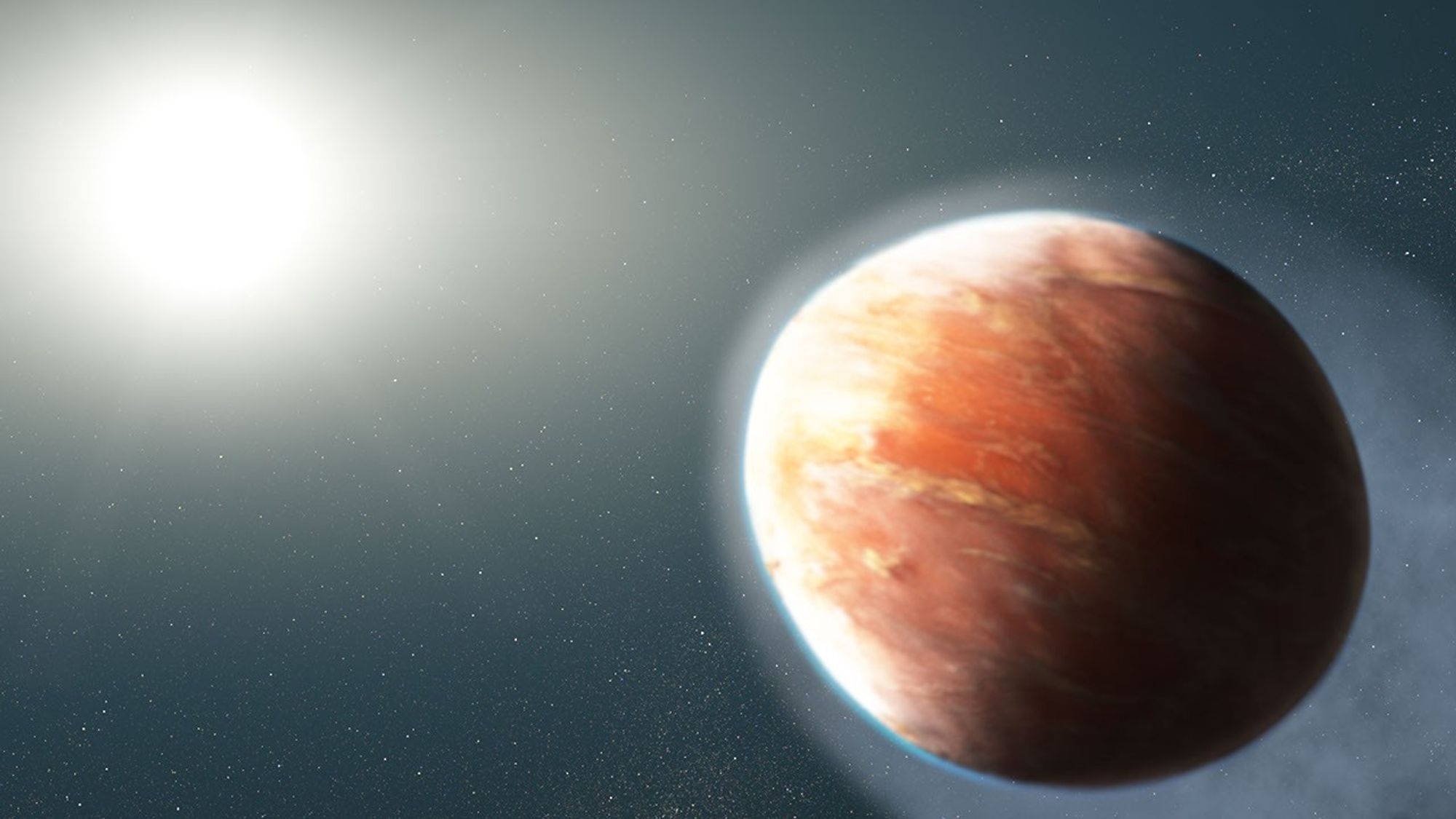
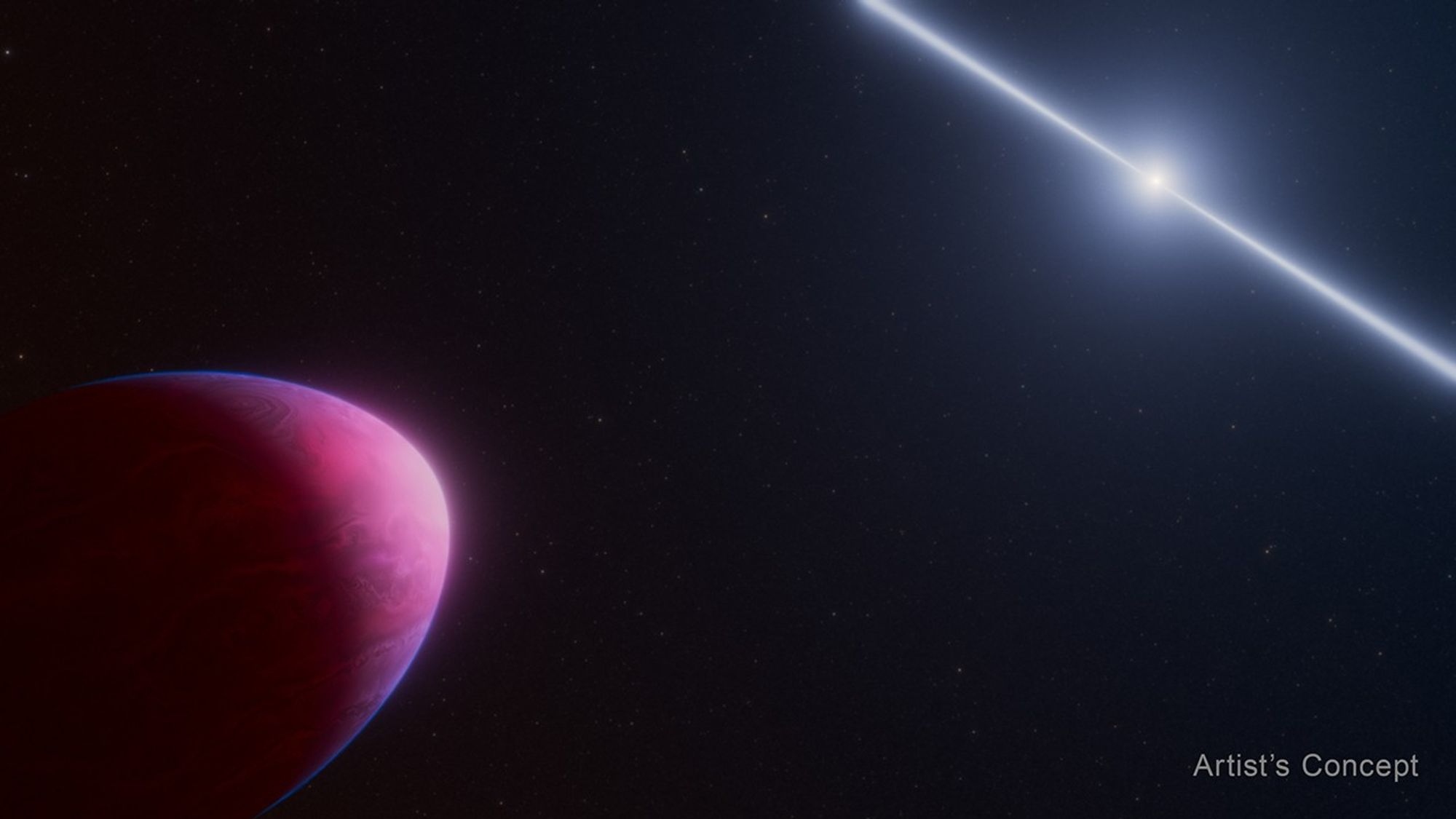
This might be the strangest of the list. PSR J2322-2650b orbits a pulsar — the remnant of a massive star that collapsed in a supernova, now a rapidly spinning neutron star beaming out radiation like a cosmic lighthouse.
It was long believed nearly impossible for a planet to survive the supernova that creates a pulsar, let alone hold onto an atmosphere under such radiation. Yet this gas giant — the first confirmed planet orbiting a pulsar — has an atmosphere dominated by helium and molecular carbon (C2 and C3), something never seen in any other studied exoplanet.
Under the planet’s internal pressure and temperature, that carbon could crystallize, leading to speculation about diamond clouds — or even diamond rain. The planet orbits just 1.6 million kilometers from its pulsar (Earth sits 150 million km from the Sun), completing a full year in just 7.8 hours. Gravitational forces are so extreme they physically distort its shape. Researchers from Stanford and the University of Chicago, who published the finding in The Astrophysical Journal Letters, admit they don’t have a model that explains how it came to exist.
4. K2-18b — The Global Ocean and the Signal That Could Change Everything
124 light-years away, in the constellation Leo, sits the most debated exoplanet of the past two years.
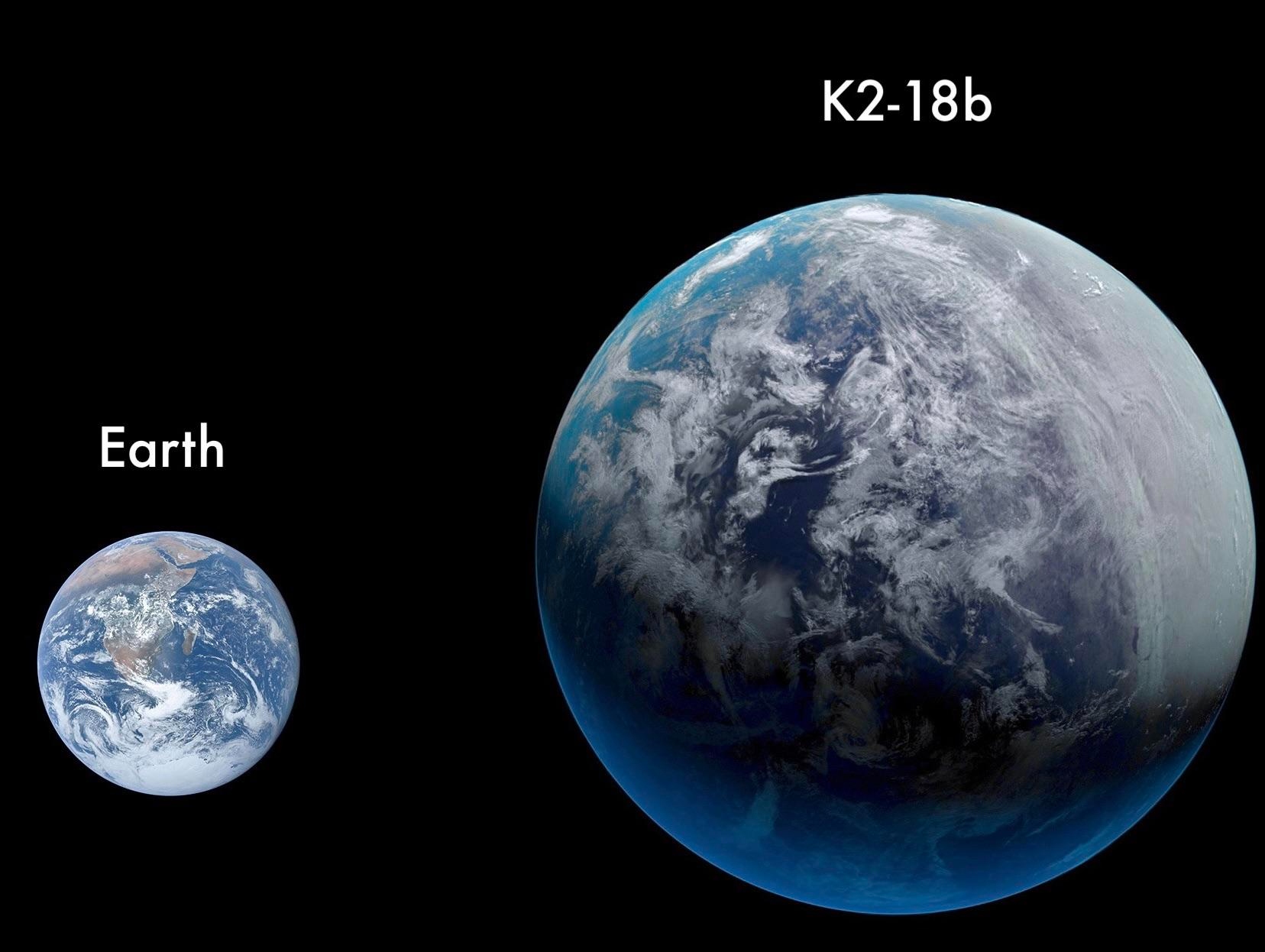
K2-18b is a super-Earth: nine times Earth’s mass and 2.6 times its size, orbiting a red dwarf within the habitable zone. Scientists at the University of Cambridge propose it could be a Hycean world — from “hydrogen” and “ocean” — a planet entirely covered by a temperate ocean beneath a hydrogen-rich atmosphere.
James Webb detected methane and carbon dioxide at concentrations consistent with that hypothesis. But the finding that shook the scientific community came in April 2025: hints of dimethyl sulfide (DMS) and its related compound (DMDS) at concentrations 20 times higher than on Earth. On our planet, DMS is produced almost exclusively by life — mainly marine phytoplankton.
Precision matters here: the signal reached a confidence level of three sigma (a 99.7% probability of not being noise), but an official scientific discovery requires five sigma. There are also known chemical processes that can produce DMS without life under certain conditions. What we do have is the strongest potential biosignature ever detected outside the solar system, on a planet with all the physical conditions needed to support life. The Cambridge team expects to confirm or rule out the signal within the next one to two years, and the upcoming Nancy Grace Roman Space Telescope (expected 2026–2027) will help refine the search further.
5. TWA 7b — James Webb’s First Direct Photograph
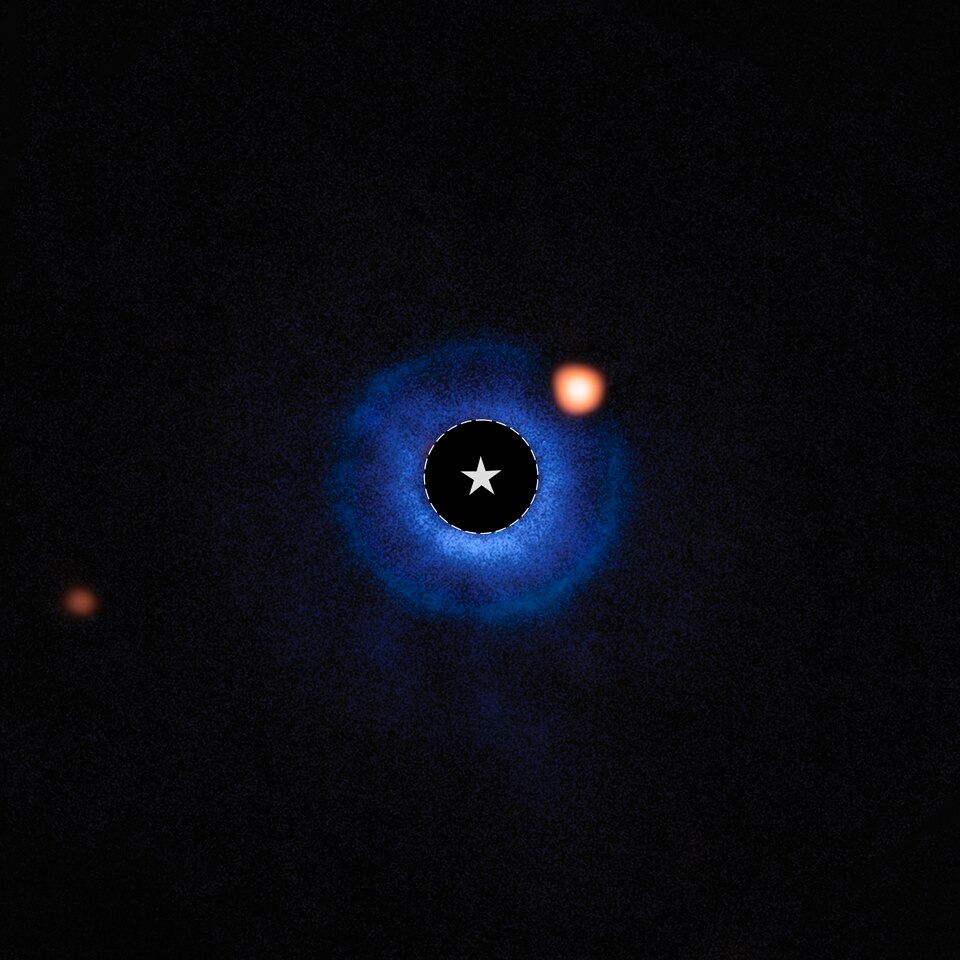
Directly photographing an exoplanet is extraordinarily difficult — a star’s brightness erases it completely. In October 2025, however, James Webb managed to capture a direct image of TWA 7b, the first exoplanet it has ever photographed directly, and the lightest exoplanet ever imaged with this technique in the history of astronomy — ten times lighter than any exoplanet previously captured this way.
With a mass comparable to Saturn and a temperature around 47°C, it orbits its star at a distance similar to that between the Sun and Pluto, taking centuries to complete a single orbit. The discovery, led by astronomer Anne-Marie Lagrange (CNRS, Paris Observatory–PSL) and published in Nature, shows that Webb can directly image planets far smaller and fainter than any previous telescope could detect.
What These Worlds Teach Us
Thirty years ago, we didn’t even know if planets existed beyond our solar system. Today we know of more than 6,000, and we can analyze what they “breathe” from thousands of light-years away.
Somewhere on that list — or among the billions we haven’t found yet — there could be a planet with oceans full of real life. K2-18b might be that signal. Or we might still be years away from confirming it. What’s certain is that, for the first time in human history, we have the tools to ask that question with real data — not faith, not hope, but physics, chemistry, and infrared spectroscopy, from 1.5 million kilometers away from Earth.
Sources: NASA, ESA/Webb, Nature, Nature Astronomy, The Astrophysical Journal Letters, University of Cambridge, University of Geneva, Center for Astrobiology (CSIC-INTA), Stanford University, University of Chicago.
Here’s a video made for YouTube where I explore each of these exoplanets in depth 👇