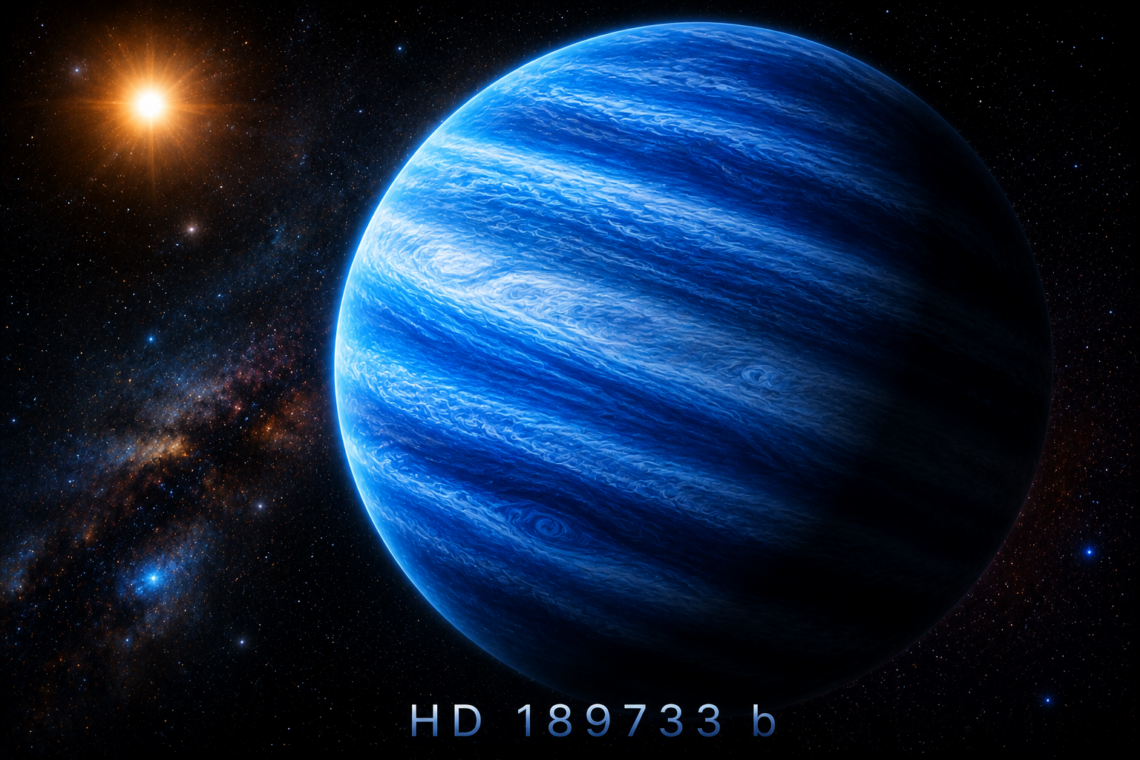
-
Did you know there’s a planet where it rains glass and it smells like rotten eggs too?
It’s called HD 189733 b, it’s 64 light-years from Earth, and it’s a gas giant orbiting super close to its star. Temperatures there top 900°C, and its atmosphere is packed with silicates, the same material glass is made of. Its winds are insane: over 8,700 km/h (5,400 mph). With that kind of force, those silicate particles could get blasted sideways, creating something like a sideways rain of glass. And as if that weren’t enough, the James Webb Space Telescope detected hydrogen sulfide in its atmosphere. Yep, the compound behind that rotten egg smell. So this planet wouldn’t just shred you with glass at insane speeds, it would also smell terrible.…
-
James Webb’s “Little red dots”: Are they the missing link between black holes and galaxies?
The tiny red dots that are rewriting the history of the Universe Imagine discovering something so bizarre that even veteran astrophysicists can’t agree on what to call it. That’s exactly what happened the moment the James Webb Space Telescope (JWST) opened its eyes on the cosmos in 2022: thousands of tiny red dots turned up scattered across images of the early universe — and four years later, they’re still upending everything we thought we knew about how galaxies are born. What exactly are the “little red dots”? When astronomer Ivo Labbé’s team (Swinburne University of Technology) combed through some of Webb’s first deep-field images, they stumbled on 13 bright red…